
Strangest Flowers in the World
Strangest Flowers
Nature never stops surprising us, and nowhere is that more evident than in the incredible diversity of flowers found around the globe. While many flowers are admired for their beauty, fragrance, and vibrant colors, others seem almost too unusual to be real. Some resemble animals, insects, or human faces, while others emit powerful odors, mimic strange objects, or bloom in extraordinary ways.
These unusual blooms have evolved their remarkable appearances for important reasons. Many strange flowers attract specific pollinators, deter predators, survive harsh environments, or improve their chances of reproduction through fascinating adaptations.
In this guide, we’ll explore some of the strangest flowers in the world, uncover the science behind their unusual features, and learn why these botanical oddities continue to captivate gardeners, botanists, and nature lovers alike.
Quick Answer
The strangest flowers in the world include the Corpse Flower, Black Bat Flower, Monkey Face Orchid, Ghost Orchid, Bee Orchid, Dracula Orchid, Hooker’s Lips, Parrot Flower, Flying Duck Orchid, Hydnora africana, Snapdragon Seed Pods, Starfish Flower, Dancing Girls Orchid, Naked Man Orchid, and Green Birdflower. Their bizarre appearances and unique survival strategies make them some of the most fascinating plants on Earth.
Quick Comparison
- Largest Strange Flower: Corpse Flower
- Strangest Smell: Corpse Flower
- Most Animal-Like: Monkey Face Orchid
- Best Flying Illusion: Flying Duck Orchid
- Most Mysterious: Ghost Orchid
- Most Human-Like: Naked Man Orchid
- Most Colorful Oddity: Parrot Flower
Comparison Table
| Flower | Native Region | Strange Feature | Pollination Strategy |
|---|---|---|---|
| Corpse Flower | Indonesia | Smells like rotting flesh | Attracts carrion insects |
| Black Bat Flower | Southeast Asia | Bat-shaped blooms | Insect pollination |
| Monkey Face Orchid | Ecuador & Peru | Looks like a monkey’s face | Bee pollination |
| Ghost Orchid | Florida & Caribbean | Appears to float in air | Hawk moth pollination |
| Bee Orchid | Europe | Mimics female bees | Sexual deception |
| Dracula Orchid | Central & South America | Face resembles a monkey or vampire | Fruit fly pollination |
| Hooker’s Lips | Central America | Bright red lips | Hummingbirds and butterflies |
| Parrot Flower | Thailand & Southeast Asia | Looks like a flying parrot | Insect pollination |
| Flying Duck Orchid | Australia | Resembles a duck in flight | Sawfly attraction |
| Hydnora africana | Southern Africa | Underground parasitic bloom | Beetle pollination |
Detailed Guide
1. Corpse Flower
The Corpse Flower (Amorphophallus titanum) is perhaps the world’s most famous strange flower.
Native to the rainforests of Sumatra, Indonesia, it produces one of the largest unbranched flower structures on Earth. When it blooms, it releases a powerful odor similar to decaying meat, giving rise to its unforgettable common name.
Why It Looks So Strange
Its unusual characteristics include:
- Massive flowering structure
- Deep burgundy interior
- Towering central spadix
- Heat-producing bloom
- Strong smell of rotting flesh
The odor attracts carrion beetles and flesh flies, which mistake the flower for a dead animal and unknowingly assist with pollination.
Interesting Facts
- Blooms may occur only every 7–10 years.
- Flowering lasts just a few days.
- Can exceed 10 feet (3 meters) in height.
- One of the most anticipated events at botanical gardens worldwide.
2. Black Bat Flower
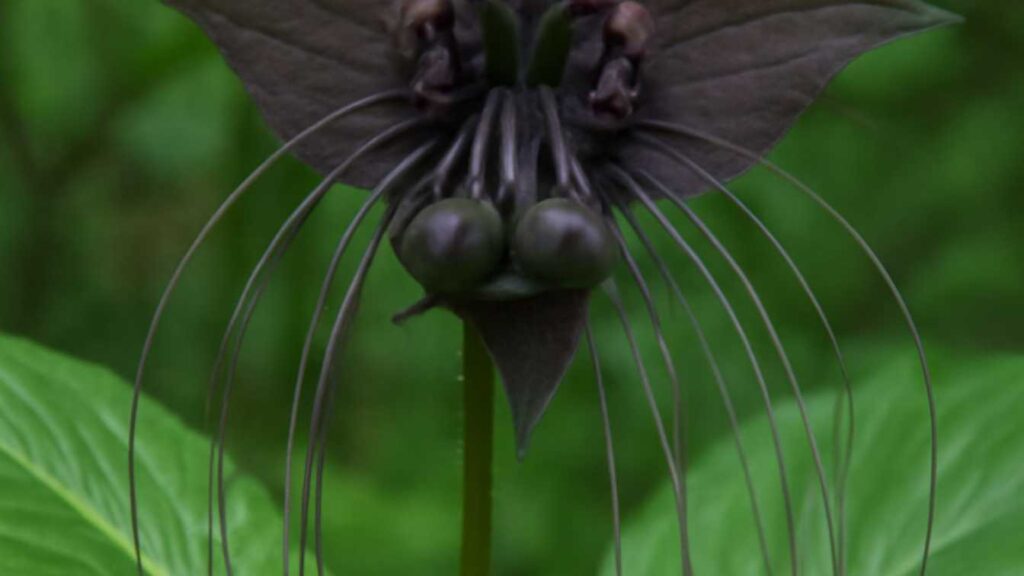
The Black Bat Flower (Tacca chantrieri) appears as though it belongs in a fantasy novel rather than a tropical rainforest.
Its nearly black petals resemble bat wings, while long thread-like bracts extend beneath the flower like dramatic whiskers.
Unique Characteristics
- Almost black blossoms
- Whiskers that can exceed 20 inches (50 cm)
- Large glossy leaves
- Exotic tropical appearance
- Rare in cultivation
Although mysterious-looking, the plant is harmless and has become a favorite among collectors of unusual tropical species.
3. Monkey Face Orchid
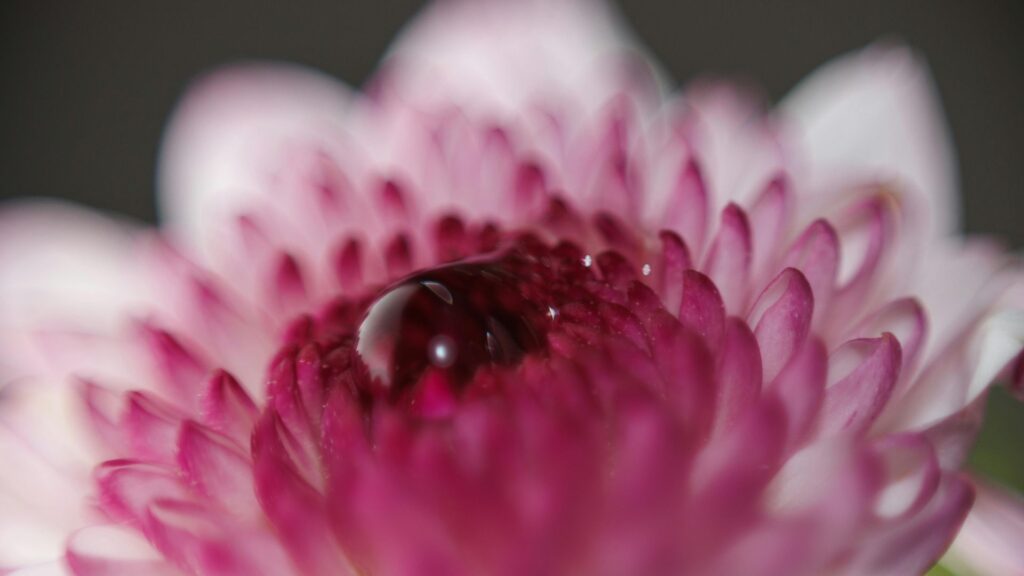
The Monkey Face Orchid (Dracula simia) is one of nature’s most amusing creations.
Its petals and central structures combine to create an astonishing resemblance to a monkey’s face, complete with expressive eyes, nose, and mouth.
Why People Love It
Gardeners and orchid enthusiasts admire it for:
- Remarkable facial resemblance
- Sweet citrus-like fragrance
- Cool mountain habitat
- Rare availability
- Long-lasting blooms
The resemblance is so convincing that many first-time viewers assume photographs have been digitally altered.
4. Ghost Orchid
The Ghost Orchid (Dendrophylax lindenii) is one of the world’s most mysterious flowers.
Unlike most plants, it has almost no visible leaves. Its white blooms appear suspended in midair because the roots cling tightly to tree bark, creating the illusion that the flowers are floating through the forest.
Fascinating Features
- Leafless growth habit
- Brilliant white flowers
- Long nectar spur
- Extremely difficult cultivation
- Very limited natural populations
Its primary pollinator is believed to be the giant sphinx moth, whose long proboscis can reach the flower’s deep nectar source.
5. Bee Orchid
The Bee Orchid (Ophrys apifera) demonstrates one of nature’s cleverest survival strategies.
Its flowers closely imitate the appearance of female bees, including shape, texture, and even subtle color patterns.
Amazing Adaptation
Male bees attempt to mate with the flower in a behavior known as pseudocopulation.
During this process:
- Pollen attaches to the bee.
- The bee visits another flower.
- Pollination occurs naturally.
This extraordinary form of mimicry allows the Bee Orchid to reproduce without offering nectar as a reward.
6. Dracula Orchid
The Dracula Orchid (Dracula simia and related Dracula species) is one of the most unusual orchids in the world. Its name comes from the Latin word for “little dragon,” referring to the long, pointed sepals that resemble dragon fangs.
Many species in the Dracula genus also have flowers that resemble the face of a monkey or a tiny vampire.
What Makes It Strange?
Its bizarre appearance includes:
- Long tail-like sepals
- Dark purple, maroon, or black petals
- Hairy flower surfaces
- Monkey-like facial pattern
- Unique mushroom-like fragrance in some species
Habitat
Dracula orchids naturally grow in the cool, misty cloud forests of:
- Ecuador
- Colombia
- Peru
They thrive in high humidity and lower temperatures, making them difficult to cultivate outside specialized environments.

7. Hooker’s Lips
The Hooker’s Lips (Psychotria elata) is famous for its bright red bracts that look remarkably like a pair of perfectly shaped lips wearing lipstick.
Although the “lips” are not actually petals, they protect the tiny flowers that emerge later.
Why It Looks This Way
Scientists believe the vivid red color helps attract pollinators such as:
- Hummingbirds
- Butterflies
Once pollination begins, the red bracts gradually open to reveal the small white flowers inside.
Interesting Features
- Brilliant scarlet bracts
- Tropical rainforest plant
- Unusual lip-shaped appearance
- Short flowering period
- Popular in botanical photography
Its eye-catching form has made it one of the internet’s most recognizable unusual flowers.
8. Parrot Flower
The Parrot Flower (Impatiens psittacina) is so unusual that many people initially believe photographs of it have been edited.
Each bloom closely resembles a colorful parrot in mid-flight, complete with wings, a curved beak, and a tail.
Unique Characteristics
- Bird-like shape
- Soft pink, white, and purple colors
- Delicate petals
- Rare natural distribution
- Seasonal blooming
Native Habitat
This remarkable flower is found in parts of:
- Thailand
- Myanmar (Burma)
It grows in moist mountain forests where the climate remains cool and humid.
9. Flying Duck Orchid
The Flying Duck Orchid (Caleana major) is one of Australia’s most fascinating native orchids.
Its flower looks astonishingly like a duck taking flight.
Why It Has This Shape
The flower evolved its unusual structure to attract male sawflies.
When a sawfly lands on the flower:
- The flower briefly traps the insect.
- Pollen sticks to its body.
- The insect escapes.
- It pollinates another orchid.
This remarkable strategy ensures successful reproduction.
Distinctive Features
- Tiny duck-shaped bloom
- Dark reddish-purple petals
- Slender green stem
- Small overall size
- Highly specialized pollination
10. Hydnora africana
Unlike most flowering plants, Hydnora africana spends nearly its entire life underground.
Only its fleshy flower emerges above the soil when conditions are right.
Why It’s So Strange
This unusual plant:
- Has no leaves
- Contains almost no chlorophyll
- Lives as a parasite
- Emits a foul odor
- Looks more like a mushroom than a flower
The smell attracts dung beetles, which crawl inside the flower and accidentally pollinate it.
Native Region
Hydnora africana grows in:
- Namibia
- South Africa
- Botswana
- Other arid regions of southern Africa
Its appearance has earned it a reputation as one of the world’s strangest plants.
11. Snapdragon Seed Pods
Most people know snapdragons for their colorful flowers, but after blooming, something even stranger appears.
As the flowers dry, their seed pods resemble tiny human skulls.
Why They’re Famous
The dried pods feature:
- Eye-like openings
- Nose-shaped cavities
- Jaw-like structures
- Skull appearance
Although this transformation is completely natural, it has inspired myths and folklore for centuries.
Gardeners often save the seed pods simply because of their unusual appearance.
12. Starfish Flower
The Starfish Flower (Stapelia gigantea) is another bloom famous for smelling like decaying flesh.
Unlike the enormous Corpse Flower, this succulent produces flat, star-shaped blossoms covered with tiny hairs.
Strange Features
- Five-pointed star shape
- Hair-covered petals
- Yellow and maroon patterns
- Rotten meat odor
- Large blooms for a succulent
Why It Smells Bad
The unpleasant scent attracts:
- Blowflies
- Flesh flies
- Carrion insects
These insects mistake the flower for dead flesh and transfer pollen while searching for a place to lay eggs.
13. Dancing Girls Orchid
The Dancing Girls Orchid (Oncidium species) appears to be filled with dozens of tiny dancers wearing flowing yellow dresses.
Even a gentle breeze can make the blooms sway, creating the illusion of dancers performing together.
Why It’s Popular
Gardeners love this orchid because it offers:
- Bright yellow flowers
- Long flowering sprays
- Easy recognition
- Elegant movement
- Excellent indoor performance in suitable conditions
Its cheerful appearance makes it one of the most beloved ornamental orchids.
Why Do Strange Flowers Evolve?
Unusual flowers aren’t strange by accident. Their extraordinary forms result from millions of years of evolution.
Every unusual color, scent, or shape serves a purpose that helps the plant survive and reproduce.
Pollinator Attraction
Many flowers evolve to attract specific pollinators.
Examples include:
- Bee Orchid attracting male bees
- Flying Duck Orchid attracting sawflies
- Ghost Orchid attracting sphinx moths
- Hooker’s Lips attracting hummingbirds
Specialized pollination often increases reproductive success.
Mimicry
Some flowers imitate animals or insects to trick pollinators.
Common examples include:
- Bee Orchid
- Monkey Face Orchid
- Flying Duck Orchid
- Parrot Flower
This strategy allows plants to reproduce without producing large amounts of nectar.
Odor Production
Several strange flowers rely on smell instead of bright colors.
Flowers like the:
- Corpse Flower
- Starfish Flower
- Hydnora africana
produce odors that resemble rotting flesh, attracting carrion insects that serve as effective pollinators.
Specialized Habitats
Many unusual flowers evolved in isolated environments where competition for pollinators is intense.
Over time, these plants developed extraordinary adaptations that helped them stand out from surrounding vegetation.
Examples include:
- Tropical rainforests
- Cloud forests
- Mountain regions
- Desert ecosystems
These specialized habitats have contributed to the remarkable diversity of strange flowers found around the world.
14. Naked Man Orchid
The Naked Man Orchid (Orchis italica) is one of the most recognizable unusual flowers in the world. Each blossom resembles a tiny human figure with outstretched arms and legs, giving the impression of dozens of miniature people hanging from the flower spike.
This remarkable resemblance has made it a favorite among photographers, gardeners, and orchid enthusiasts.
Unique Features
- Tiny human-shaped flowers
- Pink to purple blooms
- Dense flower spikes
- Sweet fragrance
- Spring blooming season
Native Habitat
The Naked Man Orchid naturally grows in:
- Italy
- Greece
- Turkey
- Portugal
- Spain
- Other Mediterranean regions
It prefers sunny grasslands, open woodlands, and rocky hillsides with well-drained soil.
15. Green Birdflower
The Green Birdflower (Crotalaria cunninghamii) appears almost magical at first glance. Its pale green blossoms closely resemble tiny hummingbirds or birds in flight perched along the stems.
Although hummingbirds are not native to Australia, where this plant grows, the resemblance is striking enough to amaze nearly everyone who sees it.
Why It’s So Unusual
Its flowers feature:
- Beak-like petals
- Folded wings
- Soft green coloring
- Bird-shaped silhouette
- Upright flower clusters
Native Region
Green Birdflower is native to:
- Northern Australia
It thrives in warm, dry climates and sandy soils.
16. White Egret Orchid (Habenaria radiata)
The White Egret Orchid looks remarkably like a small white bird in flight. Its fringed petals spread outward like wings, giving the flower an almost bird-like appearance.
Native to parts of East Asia, including Japan, Korea, and China, it grows naturally in wet grasslands and other moist habitats. Its unusual shape makes it one of the most recognizable bird-like flowers in the world.
17. Naked Man Orchid (Orchis italica)
The Naked Man Orchid has one of the strangest flower shapes in the plant world. Each individual flower can resemble a tiny human figure, with petal and lip structures forming what look like arms and legs.
Native to Mediterranean regions, this orchid is especially fascinating because an entire flower spike can appear to contain a crowd of miniature figures.
18. Flying Duck Orchid (Caleana major)
The Flying Duck Orchid is famous for its remarkable resemblance to a duck with outstretched wings. Native to Australia, this small orchid has evolved an unusual flower structure that attracts male sawflies.
When a sawfly lands on the flower, the hinged structure can temporarily trap it and help transfer pollen. Its combination of strange appearance and unusual pollination strategy makes it one of Australia’s most fascinating orchids.
19. Swaddled Baby Orchid (Anguloa uniflora)
The Swaddled Baby Orchid produces flowers that can look surprisingly similar to a tiny baby wrapped in a blanket. Native to the Andes, its rounded, creamy flowers open in a distinctive way that creates this unusual resemblance.
The flower’s appearance has made it a favorite example of how naturally occurring plant shapes can look almost too strange to be real.
20. Dove Orchid (Peristeria elata)
The Dove Orchid, also known as the Holy Ghost Orchid, has a remarkable structure in the center of its white flower that resembles a small dove. Native to Central America, particularly Panama and nearby regions, it is famous for this unusual bird-like appearance.
The combination of white petals and the dove-shaped center makes it a fitting final entry for a list of the world’s strangest flowers.
Rafflesia
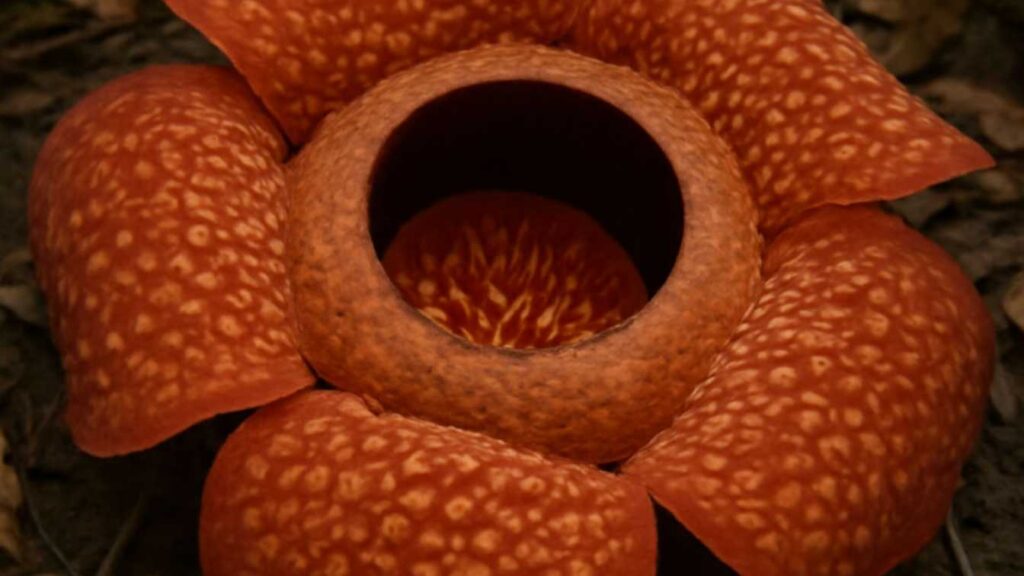
The Rafflesia (Rafflesia arnoldii) produces the world’s largest individual flower.
Unlike ordinary plants, it has:
- No stems
- No leaves
- No roots
Instead, it lives as a parasite inside vines before producing an enormous flower that can exceed 3 feet (1 meter) in diameter.
Like the Corpse Flower, it emits a foul odor to attract carrion insects for pollination.
What Makes a Flower “Strange”?
Not every unusual flower is considered strange for the same reason. Botanists often classify these plants based on the distinctive traits that set them apart from more familiar blooms.
Unusual Shapes
Some flowers mimic recognizable objects or living creatures.
Examples include:
- Flying Duck Orchid
- Monkey Face Orchid
- Green Birdflower
- Parrot Flower
- Naked Man Orchid
Their forms are the result of evolutionary adaptations that improve pollination efficiency.
Unusual Colors
While most flowers display familiar shades of red, yellow, pink, or white, some species produce unexpected colors.
Examples include:
- Black Bat Flower
- Dracula Orchid
- Deep burgundy Corpse Flower
- Dark Starfish Flower
These dramatic colors often appeal to specific pollinators or provide camouflage.
Strange Smells
Many people associate flowers with pleasant fragrances, but some species evolved the opposite strategy.
Flowers with famous unpleasant odors include:
- Corpse Flower
- Starfish Flower
- Hydnora africana
- Rafflesia
These scents imitate decomposing organic matter, attracting flies and beetles instead of bees or butterflies.
Rare Blooming Habits
Some flowers become legendary because they bloom only under exceptional conditions.
For example:
- Corpse Flower may bloom only once every several years.
- Ghost Orchid flowers unpredictably in the wild.
- Certain orchids bloom for only a short period each year.
These infrequent displays make them highly anticipated events in botanical gardens.
Can You Grow Strange Flowers at Home?
Some unusual flowers are surprisingly suitable for home gardeners, while others require specialized environments that are difficult to recreate.
Beginner-Friendly Choices
If you’re new to growing unusual plants, consider:
- Dancing Girls Orchid
- Black Bat Flower (in warm, humid climates)
- Snapdragon
- Bee Orchid (where climate permits)
These species are generally more accessible than highly specialized tropical plants.
Advanced Growing Challenges
Experienced gardeners may enjoy attempting species such as:
- Ghost Orchid
- Dracula Orchid
- Flying Duck Orchid
- Monkey Face Orchid
These plants often require precise humidity, temperature, light, and airflow to thrive.
Nearly Impossible for Home Cultivation
Some strange flowers are rarely grown successfully outside botanical gardens or their native habitats.
These include:
- Corpse Flower
- Rafflesia
- Hydnora africana
Their complex life cycles and specialized environmental needs make cultivation extremely challenging.
Tips for Growing Unusual Flowers
If you’re interested in adding strange flowers to your collection, these practices can improve your chances of success.
Research Before Buying
Every species has different requirements for:
- Sunlight
- Temperature
- Soil
- Humidity
- Watering
- Fertilization
Understanding these needs beforehand helps prevent common mistakes.
Purchase From Reputable Nurseries
Always buy plants from trusted growers that propagate specimens legally and responsibly.
This helps ensure:
- Healthy plants
- Accurate identification
- Ethical sourcing
- Better long-term success
Avoid purchasing rare species that may have been illegally collected from the wild.
Recreate Natural Conditions
Many unusual flowers thrive only when their native habitats are closely replicated.
Depending on the species, this may involve:
- High humidity
- Filtered sunlight
- Excellent drainage
- Stable temperatures
- Good air circulation
Providing the right environment is often the key to healthy growth and successful flowering.
Best Recommendations
| Purpose | Recommended Flower | Why It Stands Out |
|---|---|---|
| Strangest Overall | Corpse Flower | Massive bloom with its famous odor |
| Best Animal Look-Alike | Monkey Face Orchid | Convincing monkey-face appearance |
| Best Bird Look-Alike | Green Birdflower | Flowers resemble tiny birds in flight |
| Best Insect Mimic | Bee Orchid | Cleverly imitates female bees |
| Best Orchid | Dracula Orchid | Dramatic shape and unusual patterns |
| Best Conversation Piece | Black Bat Flower | Dark blooms with long whiskers |
| Best for Collectors | Flying Duck Orchid | Rare and fascinating pollination strategy |
| Best Fragrant Surprise | Monkey Face Orchid | Sweet citrus scent despite its odd appearance |
| Most Mysterious | Ghost Orchid | Appears to float in the air |
| Largest Strange Flower | Corpse Flower | One of the tallest flowering structures on Earth |
FAQs
What is the strangest flower in the world?
The Corpse Flower (Amorphophallus titanum) is widely considered the strangest flower in the world. It can grow over 10 feet (3 meters) tall, blooms only every several years, and releases a powerful odor similar to rotting flesh to attract pollinating insects.
Why do some flowers smell like rotten meat?
Some flowers evolved to attract carrion insects such as flies and beetles instead of bees or butterflies. By producing an odor that mimics decaying animals, these plants trick insects into visiting their flowers, which helps with pollination.
Examples include:
- Corpse Flower
- Rafflesia
- Starfish Flower
- Hydnora africana
Which flower looks like a monkey?
The Monkey Face Orchid (Dracula simia) is famous for its blooms that closely resemble a monkey’s face. Its unique pattern, shape, and coloring make it one of the most photographed orchids in the world.
Is the Black Bat Flower actually black?
Not completely. The Black Bat Flower is typically a very dark shade of purple or maroon that appears black under most lighting conditions. Its long whisker-like bracts and bat-shaped petals make it one of the most dramatic tropical flowers.
What flower looks like a duck?
The Flying Duck Orchid (Caleana major), native to Australia, has a flower that remarkably resembles a duck taking flight. This unusual shape plays an important role in attracting its specialized pollinators.
Which strange flower is the largest?
The Corpse Flower produces one of the tallest flowering structures in the plant kingdom, while Rafflesia arnoldii is known for producing the world’s largest individual flower, with blooms that can exceed 3 feet (1 meter) in diameter.
Are strange flowers rare?
Many unusual flowers are also rare because they grow only in specific habitats or require unique environmental conditions.
Examples include:
- Ghost Orchid
- Monkey Face Orchid
- Flying Duck Orchid
- Dracula Orchid
- Corpse Flower
However, some strange-looking flowers, such as the Snapdragon and Dancing Girls Orchid, are more widely cultivated.
Can strange flowers be grown at home?
Yes, some can.
Good options for experienced gardeners include:
- Black Bat Flower
- Dancing Girls Orchid
- Bee Orchid
- Snapdragon
- Certain Monkey Face Orchids from reputable growers
Others, such as Rafflesia, Corpse Flower, and Hydnora africana, are extremely difficult to cultivate outside botanical gardens or research facilities.
Why do flowers mimic animals?
Many flowers evolved to imitate animals or insects because mimicry increases their chances of successful pollination.
For example:
- Bee Orchid mimics a female bee.
- Flying Duck Orchid resembles a duck to attract sawflies.
- Monkey Face Orchid has evolved a striking facial pattern.
- Green Birdflower resembles a small bird in flight.
These adaptations help flowers reproduce without relying solely on nectar rewards.
Where can I see strange flowers?
Many of the world’s strangest flowers can be found in:
- Botanical gardens
- Orchid conservatories
- Tropical greenhouses
- Nature reserves
- Protected national parks
Some species bloom only occasionally, so visiting during flowering season offers the best chance to see them in person.

Final Thoughts
The strangest flowers in the world remind us that nature is far more imaginative than fiction. Through millions of years of evolution, plants have developed extraordinary shapes, colors, scents, and survival strategies that challenge our expectations of what a flower should look like.
From the towering Corpse Flower with its infamous smell to the charming Monkey Face Orchid, the elegant Flying Duck Orchid, and the mysterious Ghost Orchid, every species tells a remarkable story of adaptation. Some imitate insects to attract pollinators, others resemble birds or human figures, and a few rely on scents that most people would find unpleasant. These unusual characteristics are not accidents—they are highly specialized solutions that help each plant survive in its native environment.
Beyond their fascinating appearances, many of these flowers highlight the importance of conservation. Habitat loss, climate change, and illegal collection threaten several of the world’s rarest and strangest species. Supporting ethical growers, respecting protected habitats, and learning about these remarkable plants all contribute to preserving their future.
Whether you’re a gardener seeking unusual additions to your collection, a photographer searching for extraordinary subjects, or simply someone who enjoys the wonders of the natural world, these incredible flowers offer endless inspiration. Their bizarre beauty proves that the plant kingdom is filled with surprises waiting to be discovered.
As you continue exploring the fascinating diversity of flowers, you’ll find that the strangest blooms are often the ones that leave the most lasting impression—not because they fit traditional ideas of beauty, but because they reveal the extraordinary creativity of nature itself.