

20 Rare Blue Flowers: Beautiful & Unusual Blue Blooms
Blue flowers are among the most unusual sights in nature. While many plants produce blue-looking blooms, genuinely blue flowers are much less common, which makes certain species especially fascinating to gardeners, collectors, and flower lovers.
In this guide, you’ll discover 20 rare, unusual, or exceptionally distinctive blue flowers, including their scientific names, natural habitats, appearance, and growing considerations. Some are difficult to cultivate, while others are more practical for home gardens.
If you’re searching for rare blue flowers, rare blue flower names, exotic blue flowers, or the rarest blue flowers in the world, this list is a useful starting point.
Quick Answer
Some of the most striking rare or unusual blue flowers include the Himalayan Blue Poppy, Blue Vanda Orchid, Gentian, Blue Lotus, Blue Corydalis, Blue Passionflower, Blue Puya, and Blue Jade Vine.
The Himalayan Blue Poppy is especially famous for its intense blue petals, while the Blue Vanda Orchid is notable for producing naturally blue flowers. However, not every flower commonly described online as “rare” is scientifically rare, so this list focuses on flowers that are unusual, naturally blue, geographically restricted, difficult to grow, or especially distinctive.
Quick Comparison
| Flower | Scientific Name | Native Range | Growing Difficulty |
|---|---|---|---|
| Himalayan Blue Poppy | Meconopsis spp. | Himalayas & nearby regions | Difficult |
| Blue Vanda Orchid | Vanda coerulea | Himalayas to Southeast Asia | Difficult |
| Gentian | Gentiana spp. | Europe, Asia & Americas | Moderate–Difficult |
| Blue Lotus | Nymphaea nouchali var. caerulea | Tropical regions | Moderate |
| Blue Corydalis | Corydalis flexuosa | China | Moderate |
| Blue Passionflower | Passiflora caerulea | South America | Moderate |
| Blue Puya | Puya alpestris | Chile | Moderate |
| Blue Jade Vine | Strongylodon macrobotrys | Philippines | Difficult |
| Blue-Eyed Grass | Sisyrinchium spp. | Americas | Easy–Moderate |
| Blue Lace Flower | Trachymene coerulea | Australia | Moderate |
1. Himalayan Blue Poppy
Scientific name: Meconopsis spp.
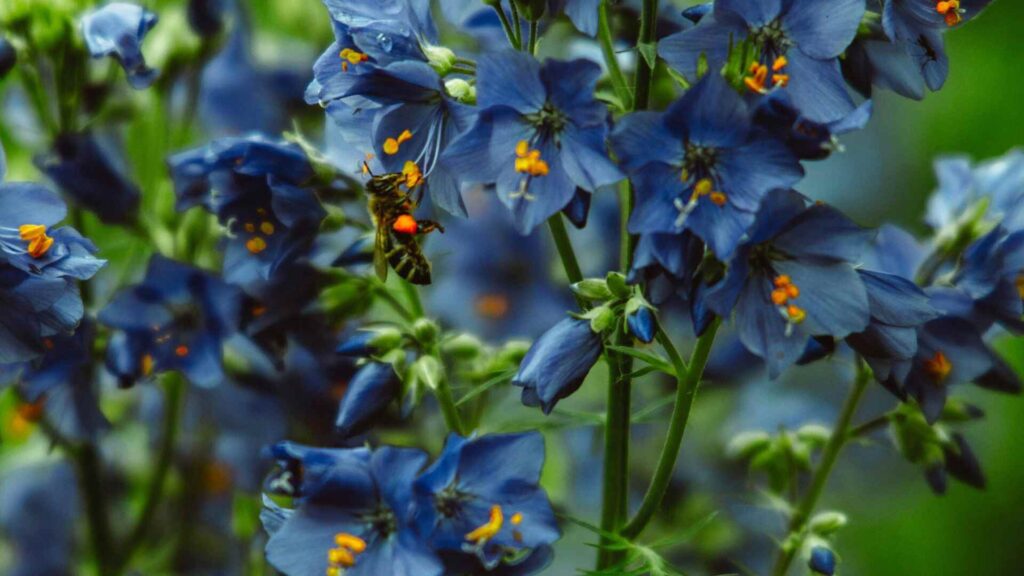
The Himalayan Blue Poppy is one of the flowers most strongly associated with the idea of a naturally blue bloom. Its delicate petals can appear sky blue to deep blue, usually surrounding a contrasting center of stamens.
These poppies are associated with cool, mountainous environments in the Himalayas and surrounding regions. Their beauty is matched by their reputation for being challenging garden plants because they generally prefer cool temperatures, moisture, and conditions unlike those found in many warm climates.
For gardeners who can provide the right environment, however, the Himalayan Blue Poppy is one of the most spectacular blue-flowering plants to grow.
Best for: Cool climates, alpine-style gardens, experienced gardeners.
2. Blue Vanda Orchid
Scientific name: Vanda coerulea
The Blue Vanda Orchid is one of the most famous naturally blue orchids. Kew describes its flowers as large, vivid blue, and long-lasting, with individual flowers reaching around 13 cm across. Its native range extends from the eastern Himalayas toward southern China and parts of mainland Southeast Asia.
Although it was historically regarded as extremely rare in the wild, botanical knowledge has expanded its known range. Kew now describes it as relatively common and widespread in parts of the Himalayan region, so calling it simply “one of the rarest flowers” would be misleading.
It remains highly desirable because naturally blue flowers are unusual in orchids and because Vanda coerulea has played an important role in breeding blue and purple orchid hybrids.
Best for: Orchid collectors and warm, humid growing environments.

3. Gentian
Scientific name: Gentiana spp.
Gentians are a large group of plants famous for their intense blue flowers. Kew records the genus across a remarkably broad range, including temperate Eurasia, tropical Asian mountains, Australia, and parts of the Americas.
Many gentians have rich blue, trumpet-shaped, or bell-like flowers that stand out dramatically against green alpine vegetation.
Rather than calling every gentian rare, it is more accurate to describe the group as unusual and highly distinctive blue-flowering plants, with individual species varying considerably in distribution and availability.
Best for: Rock gardens, alpine gardens, and gardeners who can match the needs of a particular species.

4. Blue Lotus
Scientific name: Nymphaea nouchali var. caerulea
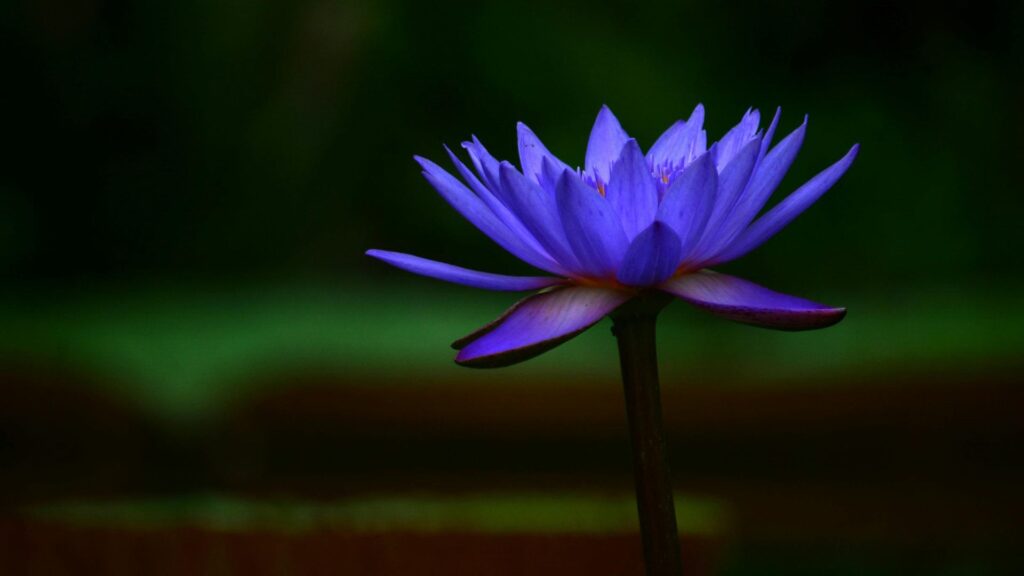
The Blue Lotus is a striking aquatic flower with blue to blue-violet petals and a contrasting yellow center. It has a long association with ornamental water gardens and historical cultures.
Its modern botanical naming can be confusing because older sources frequently use Nymphaea caerulea. When writing about this flower, it is useful to check the current taxonomic treatment rather than relying on older common-name lists.
Blue Lotus is best suited to ponds, water gardens, and other environments where its aquatic growing requirements can be met.
Best for: Water gardens and ornamental ponds.
5. Blue Corydalis
Scientific name: Corydalis flexuosa
Blue Corydalis is a delicate perennial known for its unusual blue flowers. The blooms have a distinctive tubular form and appear above attractive foliage, creating a soft but noticeable display.
Unlike some of the giant tropical or alpine blue flowers on this list, Blue Corydalis can be considered for a garden setting where suitable cool, moist, and well-drained conditions are available.
Its relatively unusual flower color makes it particularly interesting for gardeners who want something different from common blue-flowering perennials.
Best for: Cool, shaded or partially shaded gardens.

6. Blue Passionflower
Scientific name: Passiflora caerulea
Blue Passionflower combines unusual color with an exceptionally complex flower structure. Its petals and sepals are surrounded by a dramatic corona of filaments, giving the bloom an almost exotic, three-dimensional appearance.
The plant is a vigorous climbing vine and can produce flowers over a long growing season when conditions are favorable.
Although it isn’t scientifically appropriate to call every Blue Passionflower rare, its unusual appearance and distinctive blue-and-white flowers make it a strong choice for a guide to unusual blue blooms.
Best for: Trellises, walls, fences, and warm gardens.
7. Blue Puya
Scientific name: Puya alpestris
Blue Puya is an extraordinary plant from Chile that produces metallic turquoise-to-blue-green flowers. Its unusual color makes it stand out from ordinary blue garden flowers.
The plant belongs to the bromeliad family and has a distinctive architectural appearance even before flowering. Its unusual flowers are particularly attractive to anyone interested in strange or exotic plant forms.
Blue Puya generally needs plenty of light and excellent drainage, making it better suited to dry, sunny conditions than many moisture-loving blue flowers.
Best for: Dry gardens, collectors, and unusual plant displays.
8. Blue Jade Vine
Scientific name: Strongylodon macrobotrys
The Blue Jade Vine is famous for its hanging clusters of turquoise or blue-green flowers. Instead of producing individual flowers that resemble traditional garden blooms, it creates long cascading displays that can look almost artificial.
Native to the Philippines, this tropical vine needs warmth, humidity, space, and support for climbing. It is therefore much more challenging for gardeners in cool climates.
Its unusual flower color and dramatic growth habit make it one of the most memorable exotic blue-green flowering plants.
Best for: Tropical gardens, conservatories, and experienced growers.
9. Blue-Eyed Grass
Scientific name: Sisyrinchium spp.
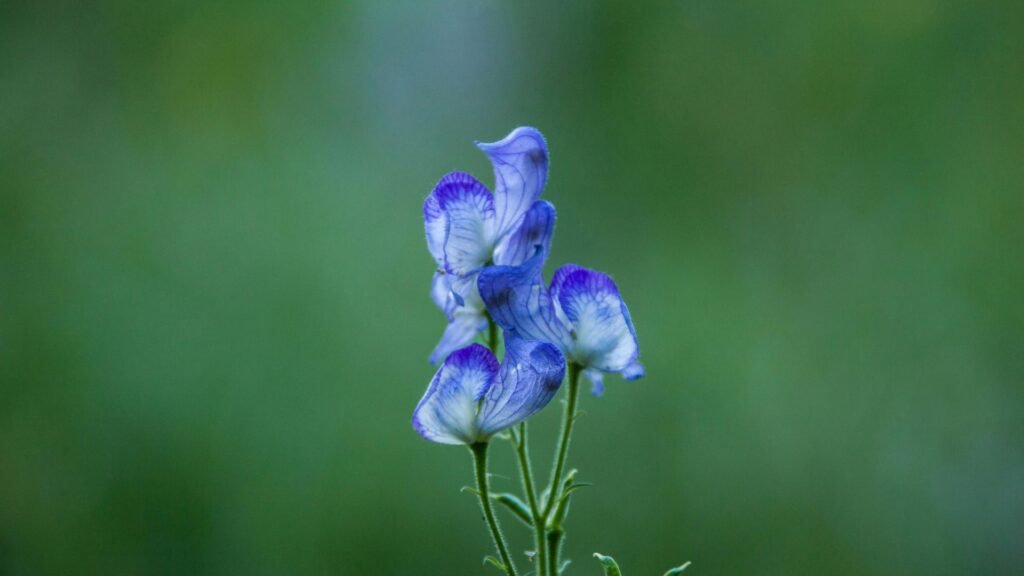
Blue-Eyed Grass is a small flowering plant rather than a true grass. Its star-shaped flowers commonly appear in blue or violet-blue shades with a contrasting yellow center.
Different Sisyrinchium species occur across the Americas, so the exact appearance, habitat, and growing requirements depend on the species.
It is a useful reminder that unusual blue flowers don’t always have to be enormous or exotic-looking. Some of the most charming examples are small native or naturalized plants.
Best for: Wildflower gardens, borders, and naturalistic planting.
[Image: Blue-Eyed Grass]
10. Blue Lace Flower
Scientific name: Trachymene coerulea
Blue Lace Flower is an Australian native recognized for its delicate, rounded flower heads made up of many tiny individual flowers. Kew lists Trachymene coerulea as a perennial native to western and southwestern Australia.
Its soft blue color and lace-like appearance make it very different from large blue poppies or orchids.
It can also work well as a cut flower, making it interesting for gardeners who want a blue bloom with a lighter, more delicate appearance.
Best for: Cottage gardens, cut-flower gardens, and ornamental borders.
What Makes a Blue Flower So Unusual?
Blue flowers are often considered unusual because strong, stable blue coloration is less common among flowering plants than colors such as yellow, red, or white.
However, it is important not to turn this into the oversimplified claim that “plants cannot produce blue pigment.” Flower color can involve several interacting pigments, cellular structures, pH effects, and light-reflection mechanisms.
11. Blue Star Flower
Scientific name: Oxypetalum coeruleum
Also known as: Tweedia
Blue Star Flower is one of the most distinctive blue blooms you can grow. Its small, five-petaled flowers have a soft sky-blue color and a simple star-like shape.
The plant is native to southern Brazil and Uruguay and grows as a perennial in subtropical conditions. Kew currently accepts Oxypetalum coeruleum as the scientific name, while Tweedia coerulea is treated as a synonym.
Unlike the enormous flowers of some blue poppies, Blue Star Flower has a delicate appearance that works well in cottage gardens and containers.
Best for: Warm climates, containers, borders, and cut flowers.

12. Great Blue Lobelia
Scientific name: Lobelia siphilitica
Great Blue Lobelia is a North American wildflower with upright stems covered in tubular blue flowers. It naturally occurs across much of eastern and central North America, including parts of Canada and the United States.
It is especially useful for gardeners looking for a native blue flower for moist areas. Unlike some of the exotic flowers in this guide, it can be much more practical in a suitable garden.
Plant it where the soil remains consistently moist, particularly around rain gardens, pond edges, or naturally damp borders.
Best for: Native gardens, rain gardens, moist borders, and pollinator planting.
13. Blue Sea Holly
Scientific name: Eryngium planum
Blue Sea Holly has a very different appearance from soft-petaled flowers. Its blue coloration appears around the flower heads and spiny bracts, creating a metallic blue effect.
The species is native from central Europe eastward through parts of Asia and reaches the western Himalayas.
Its architectural shape makes it particularly useful for gardeners who want a blue flower that looks unusual even after flowering.
It also tolerates relatively dry conditions once established, making it a useful contrast to moisture-loving blue flowers such as Great Blue Lobelia.
Best for: Sunny borders, dry gardens, gravel gardens, and modern landscapes.
14. Hardy Plumbago
Scientific name: Ceratostigma plumbaginoides
Hardy Plumbago is a low-growing perennial with brilliant blue flowers. Its native range is in north-central and east-central China, and it grows primarily in temperate environments.
It spreads gradually through rhizomes and can create a useful groundcover effect. The flowers become particularly noticeable against green foliage.
This is one of the better options on the list for gardeners who want an unusual blue flower without needing a tropical greenhouse.
Best for: Groundcover, rock gardens, borders, and sunny locations.

15. Butterfly Pea
Scientific name: Clitoria ternatea
Butterfly Pea is a tropical climbing perennial known for its vivid blue flowers. It is particularly interesting because the flowers have been used traditionally for food and other purposes in regions where the plant is cultivated.
Kew records its native range across tropical and southern Africa and the Arabian Peninsula, with the species now introduced to many tropical and subtropical regions.
It grows as a climbing plant, so it benefits from a trellis, fence, or other support.
Although Butterfly Pea is not globally rare, its intense blue flowers make it highly relevant to searches for exotic blue flowers.
Best for: Tropical gardens, trellises, containers, and warm climates.
16. Cornflower
Scientific name: Centaurea cyanus
Cornflower is a familiar name, but its intense blue flowers remain among the most recognizable blue blooms.
Kew records its native range in parts of central and eastern Mediterranean regions, with the plant now introduced to many parts of the world.
Interestingly, Kew’s Flora of Iraq material notes that cornflower was formerly a common weed in cereal fields in Britain but has become rare there because of changes in agricultural practices.
So while Cornflower should not be described as globally rare, it is a useful example of a flower that can be regionally uncommon while remaining widespread elsewhere.
Best for: Wildflower gardens, cottage gardens, containers, and cut flowers.
17. Blue Mistflower
Scientific name: Conoclinium coelestinum
Blue Mistflower produces clusters of small blue to lavender-blue flower heads that create a soft, misty appearance.
Its native range extends from southeastern Canada through central and eastern parts of the United States and includes Cuba. Kew lists it as a temperate plant and currently accepts Conoclinium coelestinum as the species name.
It is especially useful in a naturalistic garden where you want a mass of small flowers rather than a single dramatic bloom.
Best for: Native gardens, naturalized areas, and pollinator-friendly planting.

18. Blue Flax
Scientific name: Linum perenne
Blue Flax produces delicate blue flowers on slender stems. The flowers may only last for a short time individually, but the plant can produce a succession of blooms during its flowering period.
Kew records its native range from eastern central Europe through Siberia and China, with the species also introduced into various regions outside its native range.
Its light, airy appearance works especially well in naturalistic and meadow-style planting.
Best for: Sunny borders, wildflower gardens, meadows, and dry gardens.
19. Blue Vervain
Scientific name: Verbena hastata
Blue Vervain is a North American perennial or biennial with tall flower spikes carrying many small blue-purple flowers.
Kew lists its native range as Canada to the United States and recognizes blue vervain as one of its common names.
Rather than being an exotic collector’s flower, Blue Vervain is valuable because it brings an unusual blue-purple color to naturalistic gardens and can provide vertical structure.
It is particularly suited to gardens where soil moisture is available.
Best for: Native gardens, meadow planting, moist borders, and wildlife gardens.
20. Woodland Phlox
Scientific name: Phlox divaricata
Woodland Phlox is a North American perennial known for its fragrant flowers, which can range from blue to lavender shades.
Kew records the species from eastern Canada through the eastern and central United States.
It is especially interesting for gardeners who want a blue flower for partially shaded areas rather than the full-sun conditions preferred by many blue-flowering plants.
Use it beneath trees, along woodland edges, or in a shaded perennial border where the soil is suitable.
Best for: Woodland gardens, partial shade, borders, and naturalized planting.
The Rarest Blue Flowers: Which Ones Really Stand Out?
If your main interest is finding the rarest or most unusual blue flowers, several plants in this guide deserve special attention.
The Himalayan Blue Poppy is famous for its extraordinary blue petals and association with high-elevation environments. The genus Meconopsis is well documented by Kew and includes several Himalayan and Asian species.
The Blue Vanda Orchid is another standout because naturally blue orchid flowers are unusual. However, it should not simply be called one of the world’s rarest flowers today; its known distribution is broader than older descriptions suggested.
The Blue Jade Vine is also particularly distinctive. Kew records Strongylodon macrobotrys as native to the Philippines, where it grows in wet tropical forest. Kew also notes that habitat loss threatens the species and gives it a Vulnerable conservation assessment.
The Blue Corydalis is another interesting example. Kew records Corydalis flexuosa as native to Sichuan in China, while current threat-prediction data classify it as threatened.
So, rather than asking only which flower has the word “rare” attached to it online, look at natural distribution, habitat, conservation status, availability, and how unusual the flower itself is.
Which Rare Blue Flowers Can You Grow?
Not every flower on this list is equally realistic for a home garden.
Easier choices
For many gardeners, these are more practical starting points:
- Blue Flax
- Cornflower
- Blue Vervain
- Woodland Phlox
- Great Blue Lobelia
- Hardy Plumbago
- Blue Sea Holly
More challenging choices
These generally require more specialized conditions:
- Himalayan Blue Poppy
- Blue Vanda Orchid
- Blue Jade Vine
- Blue Puya
- Blue Corydalis
The best choice depends heavily on your climate. A flower that grows naturally in the Himalayas may struggle in a hot lowland garden, while a tropical vine may fail in a cold climate.
Before buying seeds or plants, check the species’ hardiness, temperature requirements, soil preferences, moisture requirements, and sunlight needs.
How to Choose the Right Blue Flower
Don’t choose a plant simply because its photograph looks beautiful.
Consider these five factors first:
1. Climate
Match the plant to your local temperatures.
2. Sunlight
Some blue flowers prefer full sun, while woodland species perform better with partial shade.
3. Soil moisture
Blue Lobelia and Blue Vervain generally make more sense in moist locations than drought-prone sites.
4. Space
Jade Vine and Blue Passionflower can become substantial climbers, while Blue-Eyed Grass remains much smaller.
5. Availability
Some unusual species may only be available through specialist nurseries or botanical collections.
For more unusual flower inspiration, you can also explore our guide to [Rare Pink Flowers], our guide to [Rare White Flowers], and our guide to [Rare Purple Flowers].
Common Questions About Rare Blue Flowers
What is the rarest blue flower?
There is no single universally accepted “rarest blue flower.” Rarity depends on how it is defined—geographic range, wild population size, conservation status, or availability in cultivation. Flowers such as Himalayan blue poppies and certain geographically restricted species are often discussed because of their unusual appearance or specialized habitats.
What is the most famous rare blue flower?
The Himalayan Blue Poppy is one of the most famous flowers associated with naturally intense blue coloration. The Blue Vanda Orchid is another well-known example, particularly among orchid enthusiasts.
Why are blue flowers rare?
Strong blue coloration is less common among flowering plants than many other flower colors. Flower color can result from combinations of pigments and structural effects, so naturally vivid blue flowers are comparatively unusual.
Can I grow rare blue flowers at home?
Yes, but the difficulty varies enormously. Cornflowers, Blue Flax, Hardy Plumbago, and some native blue wildflowers can be practical garden plants, while Himalayan Blue Poppies, Blue Vanda Orchids, and Blue Jade Vines may require specialized conditions.
Are all blue flowers actually blue?
No. Some flowers described as blue may appear violet, blue-purple, turquoise, blue-green, or lavender depending on the species, lighting, cultivar, and growing conditions.
Final Thoughts
Rare and unusual blue flowers offer some of the most memorable colors in the plant world. From the dramatic Himalayan Blue Poppy and Blue Vanda Orchid to the unusual Blue Jade Vine, Blue Star Flower, and Blue Sea Holly, there is a remarkable range of forms and growing habits.
But “rare” should not always be taken literally. Some flowers are rare only in particular regions, while others are uncommon in cultivation but widespread in nature.
If you’re choosing a blue flower for your own garden, start with the species that naturally suits your climate and growing conditions. For collectors and flower enthusiasts, the more specialized species can provide an even more fascinating look at the diversity of blue blooms.