
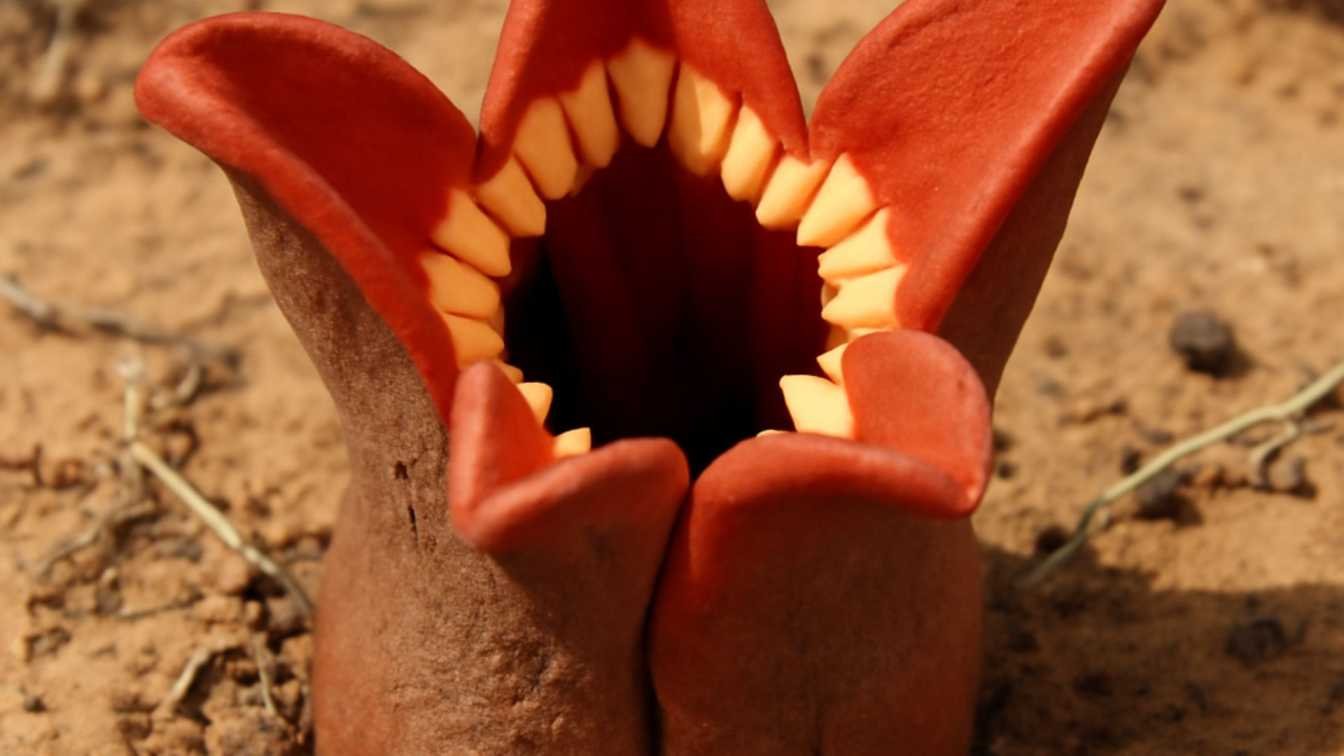
Most Unique Flower Shapes in the World
Most Unique Flower Shapes
Flowers come in an astonishing variety of shapes, each designed by nature to serve a specific purpose. While many people focus on a flower’s color or fragrance, its shape is often the result of millions of years of evolution. Some flowers mimic birds, insects, or animals to attract pollinators, while others develop unusual structures that help them survive in harsh environments.
From orchids that resemble monkeys and ducks to flowers shaped like bats, stars, and slippers, these botanical wonders demonstrate the incredible creativity of the natural world. Their unique forms not only capture our imagination but also reveal fascinating stories about adaptation, reproduction, and survival.
In this guide, you’ll discover 20 flowers with the most unique shapes, learn what makes each one extraordinary, and explore how these remarkable blooms have evolved to thrive in their natural habitats.
Quick Answer
The flowers with the most unique shapes include the Monkey Face Orchid, Flying Duck Orchid, Black Bat Flower, Bee Orchid, Lady’s Slipper Orchid, Parrot Flower, Corpse Flower, Starfish Flower, Naked Man Orchid, Green Birdflower, White Egret Flower, Hooker’s Lips, Dracula Orchid, Cobra Lily, Passion Flower, Bird of Paradise, Bleeding Heart, Dutchman’s Pipe, Pelican Flower, and Kangaroo Paw.
These flowers stand out because they resemble animals, birds, insects, everyday objects, or geometric patterns that are rarely seen in the plant kingdom.
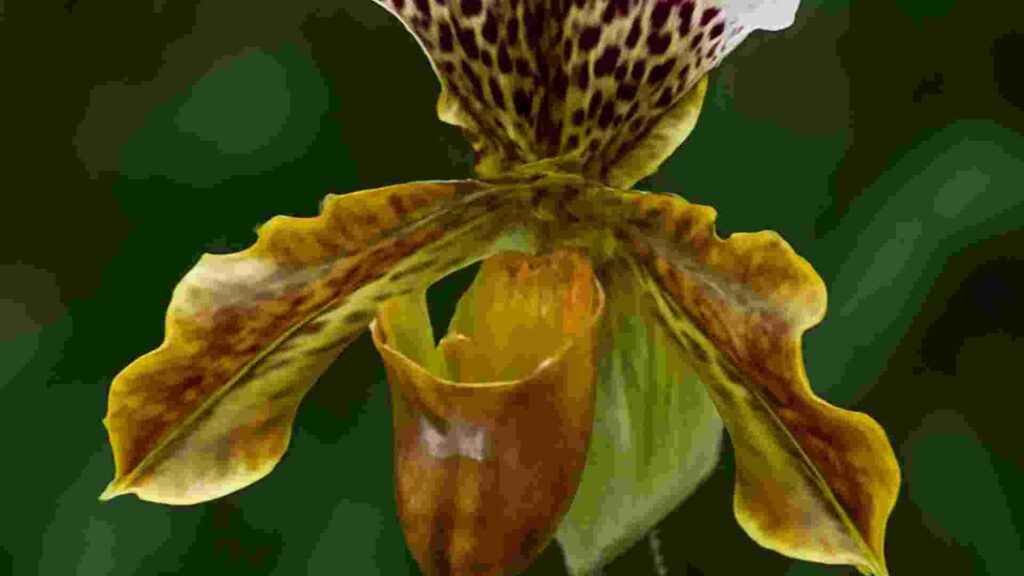
Quick Comparison
- Best Animal Shape: Monkey Face Orchid
- Best Bird Shape: Flying Duck Orchid
- Most Unusual Orchid: Dracula Orchid
- Largest Unique Flower: Corpse Flower
- Most Elegant Shape: White Egret Flower
- Best Tropical Flower: Bird of Paradise
- Most Bizarre Overall: Black Bat Flower
Comparison Table
| Flower | Native Region | Unique Shape | Main Pollinator |
|---|---|---|---|
| Monkey Face Orchid | Ecuador & Peru | Monkey face | Bees |
| Flying Duck Orchid | Australia | Flying duck | Sawflies |
| Black Bat Flower | Southeast Asia | Bat with whiskers | Insects |
| Bee Orchid | Europe | Female bee | Male bees |
| Lady’s Slipper Orchid | Asia, Europe & North America | Slipper | Bees |
| Parrot Flower | Thailand & Myanmar | Flying parrot | Insects |
| Corpse Flower | Indonesia | Giant funnel | Carrion flies |
| Starfish Flower | Southern Africa | Starfish | Flies |
| Naked Man Orchid | Mediterranean | Tiny human | Bees |
| Green Birdflower | Australia | Bird in flight | Bees |
Detailed Guide
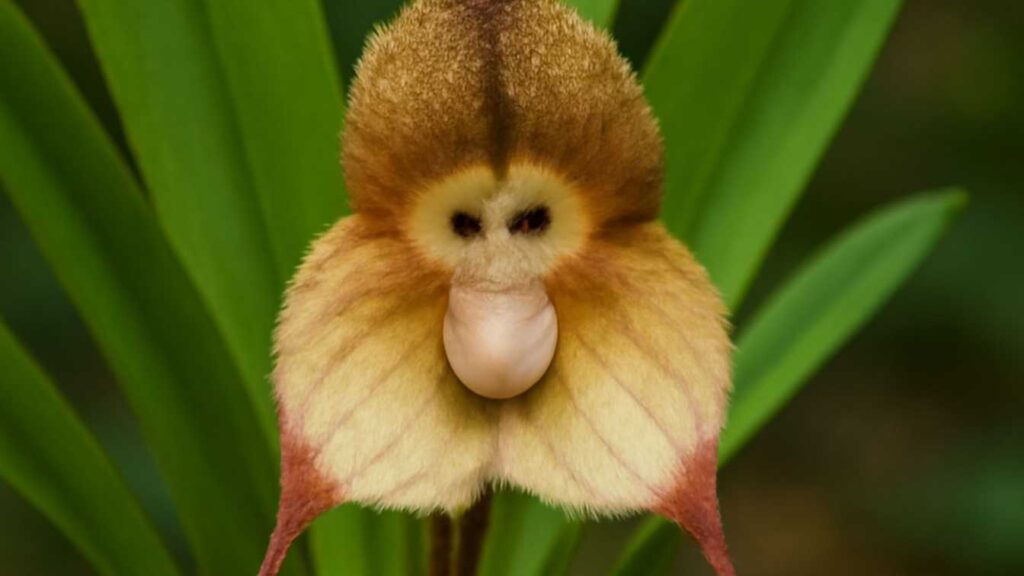
1. Monkey Face Orchid
The Monkey Face Orchid (Dracula simia) is one of the most recognizable flowers in the world thanks to its remarkable resemblance to a monkey’s face.
Its petals, sepals, and central column align perfectly to create what appears to be expressive eyes, a nose, and a smiling mouth.
Why Its Shape Is Unique
The flower features:
- Rounded facial pattern
- Symmetrical petal arrangement
- Long pointed sepals
- Soft, fuzzy texture
- Compact orchid bloom
This incredible resemblance has made it a favorite among orchid enthusiasts and photographers.
Native Habitat
The Monkey Face Orchid naturally grows in the cool cloud forests of:
- Ecuador
- Peru
- Colombia
It thrives in humid, high-altitude environments with filtered sunlight.
2. Flying Duck Orchid
The Flying Duck Orchid (Caleana major) is one of Australia’s most extraordinary native plants.
Its tiny flower closely resembles a duck taking flight, complete with a curved neck, wings, and body.
What Makes It Special?
The flower evolved this unusual shape to attract male sawflies.
When a sawfly lands on the flower:
- The flower briefly traps the insect.
- Pollen attaches to its body.
- The insect escapes.
- It pollinates another flower.
Distinctive Features
- Duck-shaped bloom
- Slender green stem
- Dark reddish-purple petals
- Small size
- Specialized pollination system
Despite being only a few centimeters tall, its resemblance to a flying duck is astonishing.
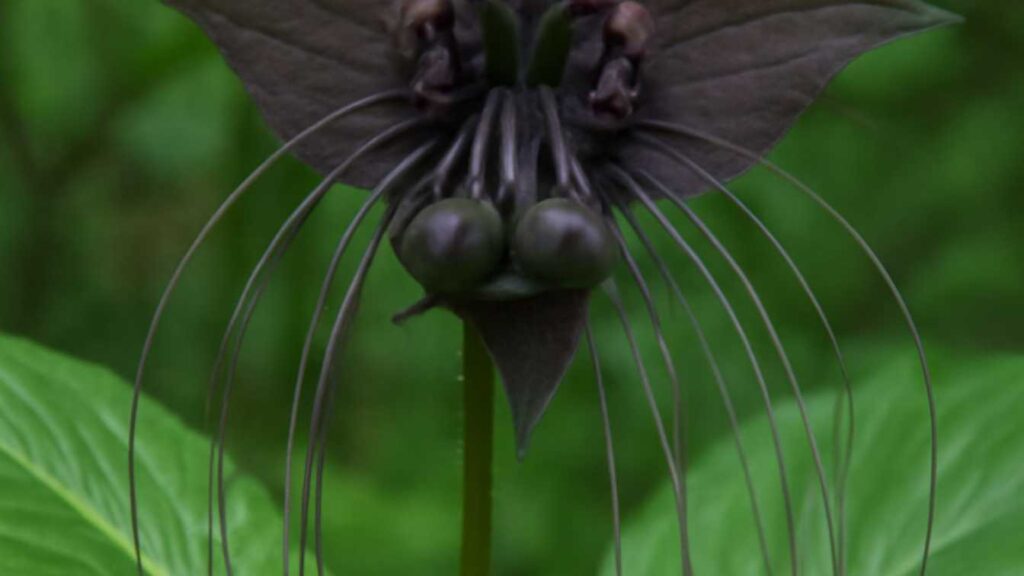
3. Black Bat Flower
The Black Bat Flower (Tacca chantrieri) looks unlike almost any other flowering plant.
Its dark petals spread outward like bat wings, while long whisker-like bracts hang beneath the bloom.
Unique Characteristics
- Nearly black flowers
- Wing-shaped petals
- Long trailing whiskers
- Large tropical leaves
- Dramatic appearance
The flower’s unusual structure helps it stand out in the shaded understory of tropical forests.
Native Region
It grows naturally in:
- Thailand
- Malaysia
- Southern China
- Other parts of Southeast Asia
4. Bee Orchid
The Bee Orchid (Ophrys apifera) demonstrates one of nature’s cleverest examples of mimicry.
Its lower petal resembles a female bee in shape, color, and texture.
Why It Has This Shape
Male bees mistake the flower for a potential mate.
As they attempt to mate with the flower:
- Pollen sticks to their bodies.
- They visit another Bee Orchid.
- Pollination occurs without nectar being offered.
This strategy is known as sexual deception, and it allows the plant to reproduce very efficiently.
5. Lady’s Slipper Orchid
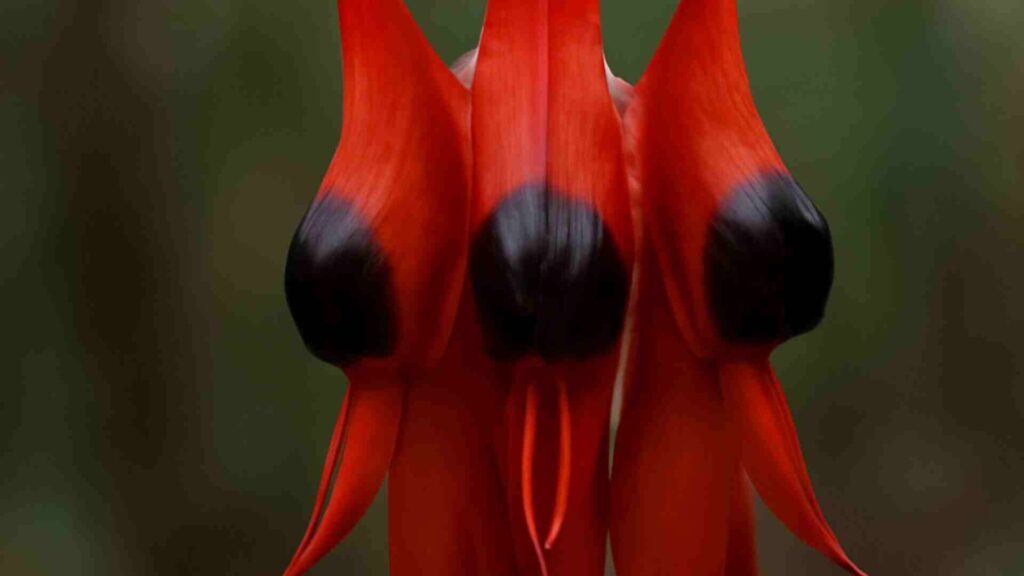
The Lady’s Slipper Orchid (Paphiopedilum and Cypripedium species) is famous for its pouch-shaped bloom that closely resembles a small slipper or shoe.
Unlike ordinary petals, the pouch functions as a trap that temporarily holds visiting insects.
Fascinating Adaptation
When insects enter the pouch:
- They search for an exit.
- They brush against pollen.
- They carry pollen to the next flower.
This ingenious design greatly improves pollination success.
Appearance
The flower includes:
- Slipper-shaped pouch
- Long elegant petals
- Bright color combinations
- Waxy texture
- Intricate patterns
Its unusual form has made it one of the world’s most collected orchids.
6. Parrot Flower
The Parrot Flower (Impatiens psittacina) is one of the rarest flowers with a truly remarkable shape. Each bloom resembles a colorful parrot soaring through the air, complete with a curved beak, folded wings, and a graceful tail.
Its lifelike appearance has amazed botanists and flower enthusiasts for decades.
Why Its Shape Is Unique
The flower features:
- Curved beak-like petals
- Wing-shaped side petals
- Long tail-like spur
- Soft pink, purple, and white colors
- Compact flying-bird appearance
Native Habitat
The Parrot Flower naturally grows in:
- Northern Thailand
- Myanmar (Burma)
It prefers cool, moist mountain forests and is rarely seen in cultivation.
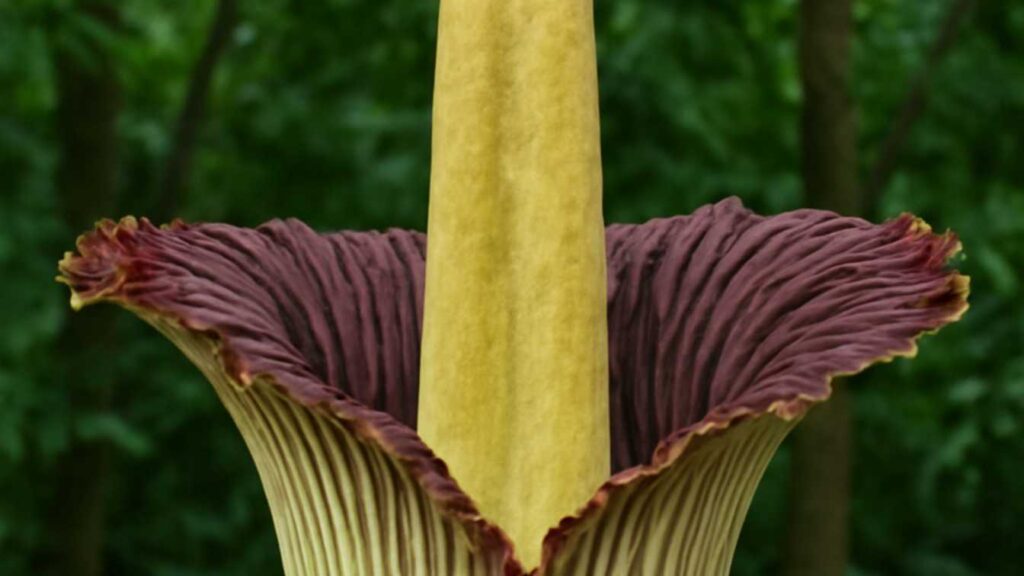
7. Corpse Flower
The Corpse Flower (Amorphophallus titanum) is famous not only for its unpleasant smell but also for its enormous and unusual structure.
Instead of producing a traditional bloom, it develops a giant funnel-like spathe surrounding a towering central spadix.
Unique Shape
Its impressive structure includes:
- Giant funnel-shaped spathe
- Tall central spike
- Deep burgundy interior
- Wavy outer edges
- Massive overall size
When fully open, the flower can exceed 10 feet (3 meters) in height, making it one of the tallest flowering structures in the world.
Why It Evolved This Shape
The funnel-like structure helps concentrate heat and odor, making it easier for carrion insects to locate the flower for pollination.
8. Starfish Flower
The Starfish Flower (Stapelia gigantea) is a succulent that produces one of the most recognizable flower shapes in nature.
Its flat, five-pointed bloom closely resembles a large sea star resting on the ground.
Distinctive Features
- Five pointed petals
- Thick, fleshy texture
- Hair-covered surface
- Yellow with maroon markings
- Large flower diameter
Combined with its scent of decaying flesh, the unusual shape attracts flies that act as pollinators.
9. Naked Man Orchid
The Naked Man Orchid (Orchis italica) produces clusters of flowers that resemble tiny human figures.
Each individual blossom appears to have:
- A head
- Two arms
- Two legs
- A small body
This extraordinary resemblance makes it one of the most photographed orchids in the world.
Native Region
It naturally occurs throughout the Mediterranean, including:
- Italy
- Greece
- Turkey
- Spain
- Portugal
Its spring blooms create spectacular displays in open grasslands and hillsides.
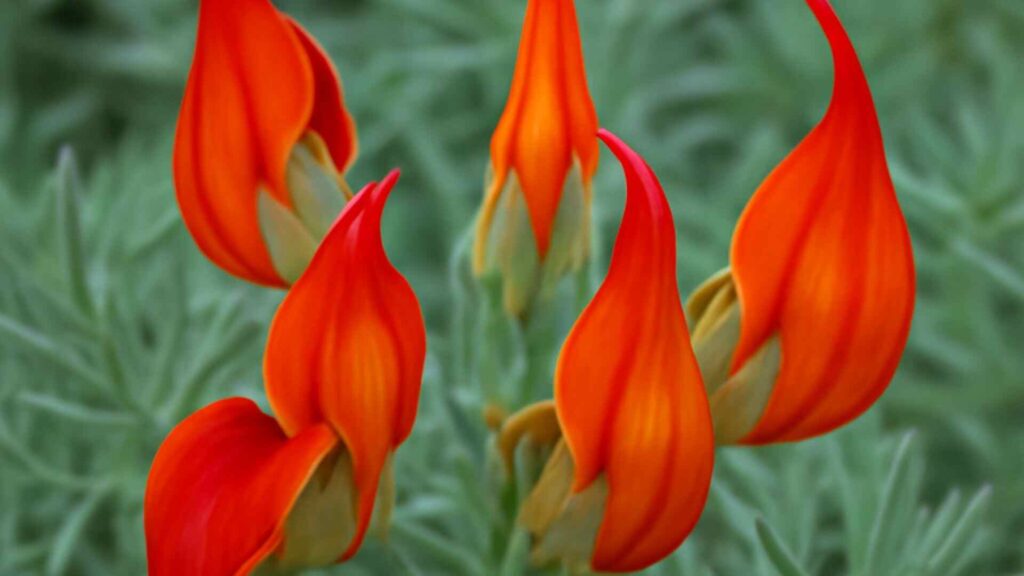
10. Green Birdflower
The Green Birdflower (Crotalaria cunninghamii) appears almost magical.
Each pale green flower resembles a tiny bird perched on a stem with folded wings and a pointed beak.
Why It’s So Unique
Its unusual shape includes:
- Bird-like silhouette
- Wing-shaped petals
- Curved beak
- Upright flower clusters
- Soft green coloring
The resemblance is so convincing that many people mistake photographs for digital artwork.
11. White Egret Flower
The White Egret Flower (Habenaria radiata) is admired for its elegant appearance.
Its fringed petals create the illusion of a white egret spreading its wings before taking flight.
Unique Characteristics
- Feather-like petals
- Snow-white blooms
- Long nectar spur
- Graceful symmetry
- Delicate fringed edges
Native Habitat
This beautiful orchid is native to:
- Japan
- Korea
- China
- Parts of eastern Russia
It grows naturally in moist meadows and wetlands.
12. Hooker’s Lips
The Hooker’s Lips (Psychotria elata) is instantly recognizable thanks to its bright red bracts that resemble a pair of full lips.
Although the “lips” are modified leaves rather than petals, they protect the tiny flowers that later emerge from the center.
What Makes It Special?
Its distinctive appearance includes:
- Bright scarlet color
- Lip-shaped bracts
- Smooth surface
- Compact growth
- Tropical rainforest habitat
Pollination
The vivid red bracts attract:
- Hummingbirds
- Butterflies
- Other nectar-feeding pollinators
Once pollination begins, the bracts gradually separate to reveal the actual flowers.
13. Dracula Orchid
The Dracula Orchid earns its name from its dramatic appearance.
Long pointed sepals resemble dragon fangs, while many species display facial markings that resemble monkeys or tiny mythical creatures.
Unique Features
- Long trailing sepals
- Dark maroon colors
- Hairy petals
- Face-like center
- Triangular bloom shape
Native Habitat
Dracula orchids thrive in:
- Ecuador
- Colombia
- Peru
Their cool, humid cloud forest environment makes them challenging to grow outside specialized greenhouses.
Why Do Flowers Develop Unique Shapes?
Flower shape is one of nature’s most effective tools for ensuring successful reproduction.
Over millions of years, flowering plants evolved specialized forms that improve their chances of attracting pollinators and producing seeds.
Attracting Specific Pollinators
Some flowers evolved to attract only one type of pollinator.
Examples include:
- Bee Orchid → Bees
- Flying Duck Orchid → Sawflies
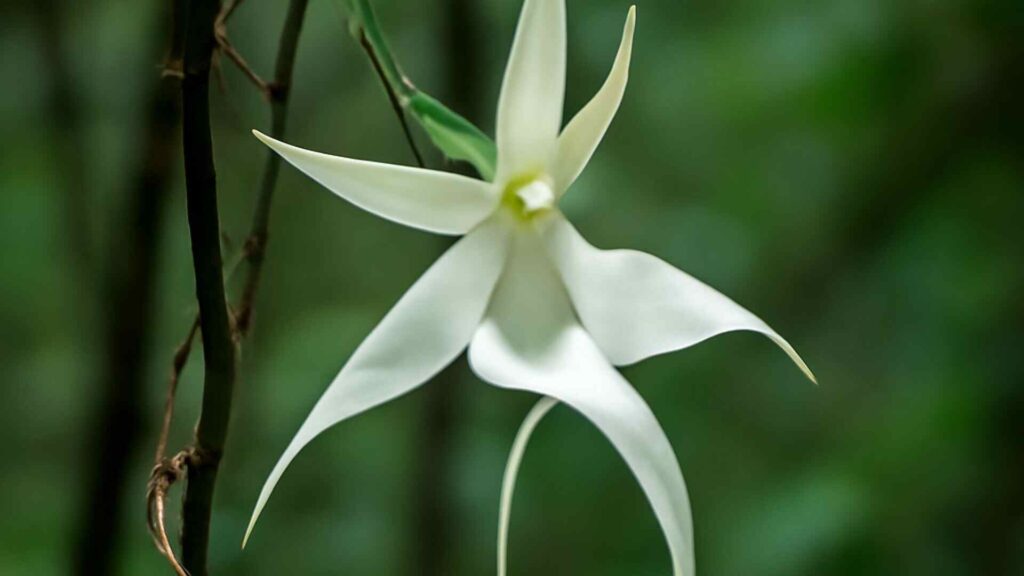
- Ghost Orchid → Hawk moths
- White Egret Flower → Moths
Specialized pollination often leads to greater reproductive success.
Mimicry
Many flowers imitate animals, insects, or birds.
This evolutionary strategy helps plants:
- Attract pollinators
- Reduce competition
- Increase pollination efficiency
- Improve seed production
Excellent examples include:
- Monkey Face Orchid
- Parrot Flower
- Green Birdflower
- Naked Man Orchid
Protection
Certain flower shapes help shield delicate reproductive parts from harsh weather, heavy rainfall, or herbivores.
Examples include:
- Lady’s Slipper Orchid’s protective pouch
- Dutchman’s Pipe’s tubular structure
- Cobra Lily’s hood-like canopy
These adaptations increase the likelihood of successful pollination and seed development.
14. Cobra Lily
The Cobra Lily (Darlingtonia californica) is one of the most unusual carnivorous plants in the world. Although it is best known for its modified pitcher leaves, its overall flower structure and growth habit make it one of the most distinctive plants found in North America.
The hooded leaves closely resemble the raised head of a striking cobra, giving the plant its common name.
Unique Features
- Cobra-like hood
- Forked, tongue-shaped appendage
- Curved tubular structure
- Carnivorous adaptation
- Elegant hanging flowers
Native Habitat
The Cobra Lily naturally grows in:
- Northern California
- Southern Oregon
It prefers cold, nutrient-poor wetlands with constantly flowing water.
15. Passion Flower
The Passion Flower (Passiflora species) has one of the most intricate flower structures in the plant kingdom.
Its blooms feature multiple layers of petals, colorful thread-like filaments, and a striking central column that creates an almost geometric design.
Why Its Shape Is Unique
The flower contains:
- Circular corona filaments
- Five prominent stamens
- Three stigmas
- Symmetrical petals
- Complex layered structure
This remarkable design makes it one of the most photographed garden flowers worldwide.
Native Region
Passion Flowers are native to:
- Central America
- South America
- Parts of North America
Many species are also cultivated in tropical and subtropical gardens around the world.
16. Bird of Paradise
The Bird of Paradise (Strelitzia reginae) is famous for producing flowers that closely resemble an exotic bird in flight.
Its bright orange and blue petals emerge from a boat-shaped bract, creating one of nature’s most recognizable floral silhouettes.
Distinctive Features
- Bird-like profile
- Bright orange petals
- Deep blue accents
- Upright bloom
- Long-lasting flowers
Pollination
Large birds perch on the flower while feeding on nectar. Their weight opens the petals, allowing pollen to attach to their feet before they visit another bloom.
17. Bleeding Heart
The Bleeding Heart (Lamprocapnos spectabilis) is cherished for its delicate heart-shaped flowers that hang gracefully from arching stems.
Each bloom appears like a tiny pink heart with a white teardrop suspended beneath it.
Unique Characteristics
- Heart-shaped petals
- Hanging flower clusters
- Soft pink and white colors
- Graceful arching stems
- Elegant spring blooms
Its romantic appearance has made it a favorite in ornamental gardens around the world.
18. Dutchman’s Pipe
The Dutchman’s Pipe (Aristolochia species) produces unusual pipe-shaped flowers that resemble antique smoking pipes or curved musical instruments.
Its tubular blooms are more than just decorative—they play a key role in the plant’s pollination strategy.
Why It’s So Unique
The flower features:
- Curved tube
- Funnel-shaped opening
- Mottled purple or green coloring
- Hair-lined interior
- Temporary insect trap
Small flies enter the flower seeking nectar and are briefly trapped until pollination is complete.
19. Pelican Flower
The Pelican Flower (Aristolochia grandiflora) is one of the largest and most dramatic members of the Dutchman’s Pipe family.
Its enormous hanging flower resembles a pelican with an extended beak or a flowing ribbon.
Distinctive Features
- Extremely long tail-like extension
- Large hanging bloom
- Deep maroon patterns
- Unusual pouch-shaped center
- Carrion-like odor
The flower attracts flies that assist with pollination by mimicking the scent of decaying organic matter.
20. Kangaroo Paw
The Kangaroo Paw (Anigozanthos species) is native to Australia and gets its name from flowers that resemble the furry paws of a kangaroo.
Its tubular blooms grow in clusters at the ends of tall stems, creating a spectacular display.
Unique Characteristics
- Paw-shaped flowers
- Velvet-like texture
- Bright red, yellow, orange, or green colors
- Long flowering season
- Excellent cut flower
Native Habitat
Kangaroo Paw naturally grows in the southwestern regions of Australia, where it thrives in sunny, well-drained environments.
How Flower Shapes Help Plants Survive
A flower’s shape is much more than a visual attraction. It is often a carefully evolved adaptation that increases the plant’s chances of survival and reproduction.
Improving Pollination
Many flowers develop specialized shapes that ensure pollen is transferred efficiently.
For example:
- Lady’s Slipper Orchid temporarily traps insects.
- Flying Duck Orchid uses a hinged flower to position pollinators.
- Dutchman’s Pipe briefly holds insects inside the bloom.
- Bird of Paradise relies on birds to activate its pollen release mechanism.
These adaptations help maximize successful pollination.
Preventing Unwanted Visitors
Some flower shapes discourage insects that are poor pollinators while attracting only the species most likely to transfer pollen effectively.
Examples include:
- Long nectar spurs that only certain moths can reach.
- Narrow floral tubes that exclude larger insects.
- Deep pouches that guide pollinators along a specific path.
This selective access increases pollination efficiency.
Protecting Reproductive Structures
Petals, bracts, and floral tubes often shield pollen and nectar from rain, wind, and excessive sunlight.
Flowers such as:
- Lady’s Slipper Orchid
- Dutchman’s Pipe
- Black Bat Flower
use their unique structures to protect delicate reproductive parts while still allowing access to suitable pollinators.
Enhancing Seed Production
When pollination occurs more effectively, plants are more likely to produce healthy seeds and continue their life cycle.
Unique flower shapes improve:
- Pollinator accuracy
- Cross-pollination
- Genetic diversity
- Reproductive success
This is one of the primary reasons such extraordinary floral forms have evolved.
Can You Grow Uniquely Shaped Flowers at Home?
Many flowers with unusual shapes can thrive in home gardens or greenhouses when given proper care.
Beginner-Friendly Options
If you’re just starting out, consider growing:
- Passion Flower
- Bleeding Heart
- Bird of Paradise
- Kangaroo Paw (in suitable climates)
These species are generally easier to cultivate than rare orchids.
Intermediate Choices
Gardeners with some experience may enjoy:
- Black Bat Flower
- Lady’s Slipper Orchid
- White Egret Flower
- Hooker’s Lips (in tropical climates)
These plants require more attention to humidity, temperature, and watering.
Advanced Challenges
Some uniquely shaped flowers are best left to experienced growers or botanical institutions.
These include:
- Monkey Face Orchid
- Flying Duck Orchid
- Dracula Orchid
- Corpse Flower
Their specialized environmental needs make successful cultivation significantly more difficult.
Best Recommendations
| Purpose | Recommended Flower | Why It Stands Out |
|---|---|---|
| Best Overall | Monkey Face Orchid | One of the most recognizable flower shapes in nature |
| Best Bird Shape | Bird of Paradise | Brilliant tropical flower resembling a bird in flight |
| Best Orchid | Lady’s Slipper Orchid | Elegant pouch-shaped bloom with unique pollination |
| Most Unusual | Black Bat Flower | Dark bat-like petals and dramatic whiskers |
| Best Carnivorous Plant | Cobra Lily | Cobra-shaped foliage with insect-trapping adaptations |
| Best Garden Flower | Bleeding Heart | Charming heart-shaped blooms for spring gardens |
| Best Tropical Flower | Passion Flower | Intricate geometric floral structure |
| Best Australian Native | Kangaroo Paw | Distinctive paw-shaped flowers with vibrant colors |
| Best Conversation Piece | Flying Duck Orchid | Tiny bloom that perfectly resembles a duck |
| Best for Collectors | Dracula Orchid | Exotic shape and fascinating cloud forest origins |
FAQs
What flower has the most unique shape?
The Monkey Face Orchid (Dracula simia) is often considered one of the most uniquely shaped flowers because its bloom closely resembles a monkey’s face. Other contenders include the Flying Duck Orchid, Black Bat Flower, and Lady’s Slipper Orchid.
Why do flowers have different shapes?
Flowers have different shapes because they evolved to attract specific pollinators and improve reproduction. Their shapes can:
- Attract bees, butterflies, birds, or moths
- Protect pollen and nectar
- Guide pollinators to reproductive parts
- Reduce competition with nearby plants
These adaptations increase the chances of successful pollination.
Which flower looks like an animal?
Several flowers resemble animals, including:
- Monkey Face Orchid – Monkey
- Flying Duck Orchid – Duck
- Parrot Flower – Flying parrot
- Green Birdflower – Bird
- Black Bat Flower – Bat
- Bee Orchid – Bee
- White Egret Flower – Egret
These remarkable similarities are examples of natural mimicry.
What is the rarest uniquely shaped flower?
The Flying Duck Orchid and the Monkey Face Orchid are among the rarest uniquely shaped flowers. Both grow in limited regions and require specific environmental conditions, making them difficult to find in the wild or cultivate successfully.
Are uniquely shaped flowers difficult to grow?
It depends on the species.
Some flowers, such as Passion Flower, Bleeding Heart, and Bird of Paradise, are relatively easy to grow in suitable climates.
Others, including the Dracula Orchid, Monkey Face Orchid, and Corpse Flower, require specialized care, controlled humidity, and precise temperatures.
Which flower looks like a shoe?
The Lady’s Slipper Orchid has a pouch-shaped bloom that resembles a small slipper or shoe. This unique structure temporarily traps insects, helping the plant achieve effective pollination.
What flower looks like a heart?
The Bleeding Heart is famous for its delicate heart-shaped flowers. Each bloom features a pink outer heart with a small white petal hanging below, giving it a distinctive and romantic appearance.
Are unique flower shapes caused by genetic mutations?
Most unusual flower shapes are not random mutations. They are the result of millions of years of evolution and natural selection. Over time, plants developed specialized forms that improved pollination, protected reproductive structures, and increased survival.
Can uniquely shaped flowers be grown indoors?
Yes, some species adapt well to indoor environments when provided with the right conditions.
Popular indoor choices include:
- Black Bat Flower
- Lady’s Slipper Orchid
- Certain Dracula Orchids
- Monkey Face Orchid (with proper humidity)
- Passion Flower (in bright indoor spaces or conservatories)
Always research the specific care requirements before bringing a plant indoors.
Which uniquely shaped flower is best for beginners?
For beginners, these flowers are excellent options:
- Passion Flower – Fast-growing vine with intricate blooms
- Bleeding Heart – Easy-to-grow perennial for shaded gardens
- Bird of Paradise – Bold tropical plant for warm climates
- Kangaroo Paw – Colorful Australian native that thrives in sunny conditions
These plants combine unusual flower shapes with relatively straightforward care.
Final Thoughts
The most unique flower shapes showcase the incredible creativity of evolution. Every curve, pouch, spur, and petal has developed for a purpose—whether it’s attracting a particular pollinator, protecting delicate reproductive parts, or ensuring successful seed production. These extraordinary adaptations remind us that flowers are far more than decorative plants; they are highly specialized organisms shaped by millions of years of natural selection.
From the expressive Monkey Face Orchid and the perfectly formed Flying Duck Orchid to the dramatic Black Bat Flower and the elegant White Egret Flower, each species offers a glimpse into nature’s remarkable ingenuity. Others, such as the Lady’s Slipper Orchid, Passion Flower, and Bird of Paradise, combine striking appearances with fascinating pollination strategies that continue to captivate botanists and gardeners alike.
Many of these uniquely shaped flowers also highlight the importance of conservation. Habitat destruction, climate change, and illegal plant collection threaten several of these remarkable species. Supporting reputable nurseries, respecting protected habitats, and learning about responsible gardening practices can help preserve these botanical treasures for future generations.
Whether you’re looking to expand your garden with unusual blooms, deepen your appreciation for plant evolution, or simply marvel at nature’s diversity, these 20 flowers prove that the plant kingdom is full of astonishing designs. Their extraordinary forms make them unforgettable additions to any collection and enduring reminders of the endless wonders found in the natural world.
One Comment