25 Stunning Purple Perennial Flowers That Return Year After Year
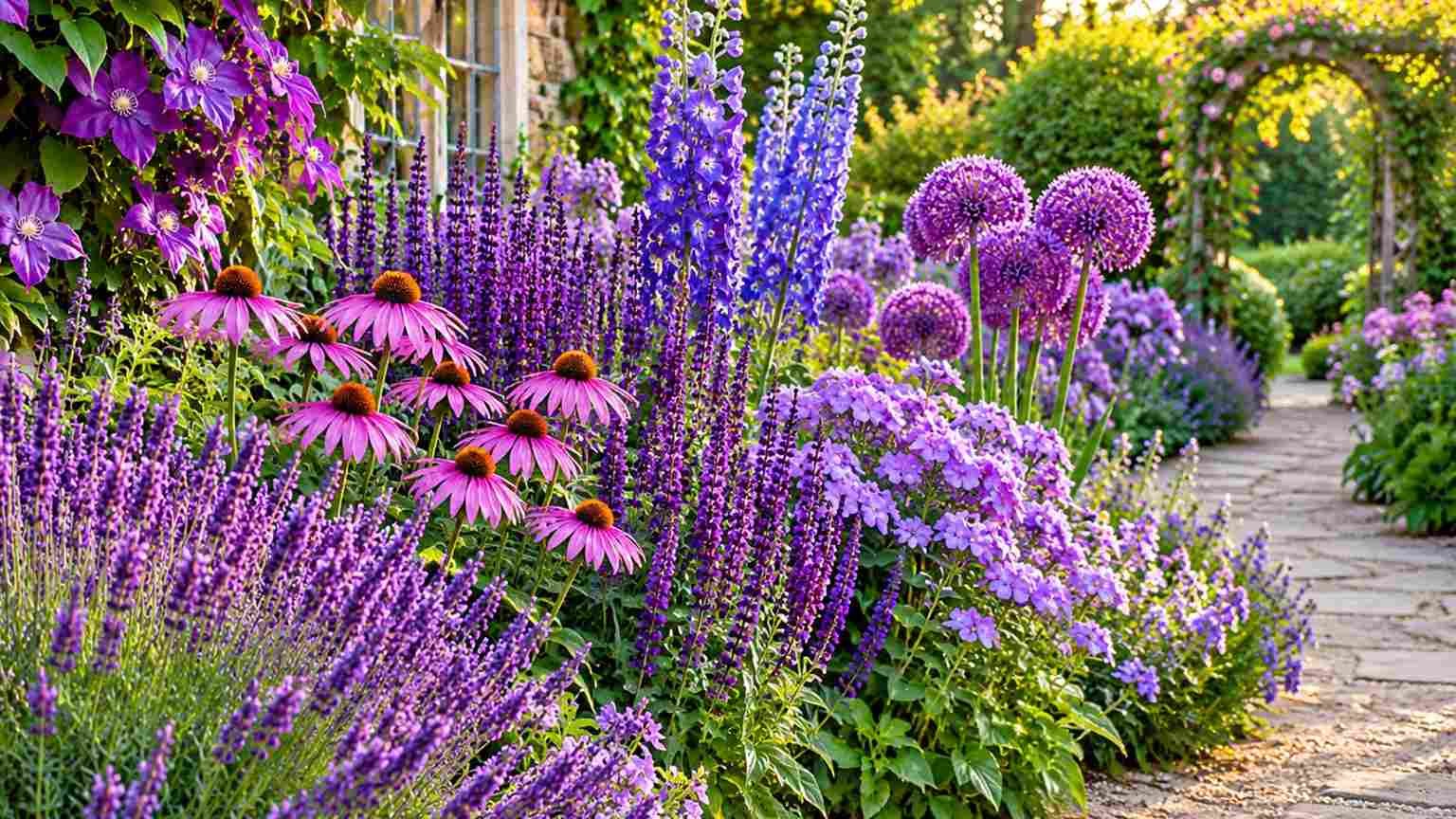
Purple perennial flowers bring depth, contrast, and lasting color to garden beds, borders, cottage gardens, and pollinator-friendly landscapes. From deep violet salvia spikes and lavender blooms to purple coneflowers and delicate woodland flowers, there are varieties for sunny gardens, partially shaded spaces, and different flowering seasons.
The best purple perennials are not necessarily the ones with the brightest blooms. A good choice should also suit your soil, sunlight, drainage, climate, and available space. Some spread into useful ground covers, while others grow tall enough to create a dramatic background for shorter plants.
In this guide, you’ll discover 25 purple-flowering perennial plants, including their botanical names, flowering periods, growing preferences, and garden uses. You’ll also learn how to choose suitable varieties, combine different bloom times, and avoid common planting mistakes.
One important distinction: purple is a broad color description. Some plants have true violet or deep-purple flowers, while others appear lavender, mauve, or blue-violet. Flower color can also vary by cultivar and growing conditions.
Quick Answer: What Are the Best Purple Perennial Flowers?
Some popular purple perennial flowers include:
- Purple coneflower (Echinacea purpurea)
- English lavender (Lavandula angustifolia)
- Garden phlox (Phlox paniculata)
- Meadow sage (Salvia nemorosa)
- Catmint (Nepeta × faassenii)
- Blazing star (Liatris spicata)
- Siberian iris (Iris sibirica)
- Balloon flower (Platycodon grandiflorus)
- Hardy geranium (Geranium species and cultivars)
- Aster (Symphyotrichum species)
The right choice depends on your local climate, soil moisture, and the amount of direct sunlight your garden receives.

Purple Perennial Flowers Comparison Table
The following table provides a starting point for comparing 25 purple-flowering perennials. Bloom periods and mature sizes are approximate; they vary with cultivar, climate, and location. Hardiness zones are included as general North American guidance, not a guarantee of performance in every region.
Replace the entire table with this corrected version:
| # | Purple perennial | Bloom period | Sunlight |
|---|---|---|---|
| 1 | Purple Coneflower | Summer | Full sun to partial shade |
| 2 | English Lavender | Late spring–summer | Full sun |
| 3 | Garden Phlox | Summer | Full sun to partial shade |
| 4 | Meadow Sage | Late spring–summer | Full sun |
| 5 | Catmint | Late spring–summer | Full sun |
| 6 | Blazing Star | Summer | Full sun |
| 7 | Siberian Iris | Late spring–early summer | Full sun to partial shade |
| 8 | Balloon Flower | Summer | Full sun to partial shade |
| 9 | Hardy Geranium | Spring–summer | Sun to partial shade |
| 10 | New England Aster | Late summer–fall | Full sun |
| 11 | Anise Hyssop | Summer–early fall | Full sun to partial shade |
| 12 | Columbine | Spring–early summer | Partial shade to sun |
| 13 | Creeping Phlox | Spring | Full sun |
| 14 | Ornamental Allium | Late spring–summer | Full sun |
| 15 | Monkshood | Summer–early fall | Partial shade |
| 16 | Great Blue Lobelia | Summer–early fall | Sun to partial shade |
| 17 | Russian Sage | Summer–fall | Full sun |
| 18 | Veronica | Late spring–summer | Full sun |
| 19 | Japanese Anemone | Late summer–fall | Partial shade to sun |
| 20 | Jacob’s Ladder | Spring–early summer | Partial shade |
| 21 | Bee Balm | Summer | Sun to partial shade |
| 22 | Delphinium | Late spring–summer | Full sun |
| 23 | Blue False Indigo | Late spring–early summer | Full sun to partial shade |
| 24 | Peach-Leaved Bellflower | Late spring–summer | Full sun to partial shade |
| 25 | Purple Clematis | Summer–early fall | Sun to partial shade |
1. Purple Coneflower (Echinacea purpurea)
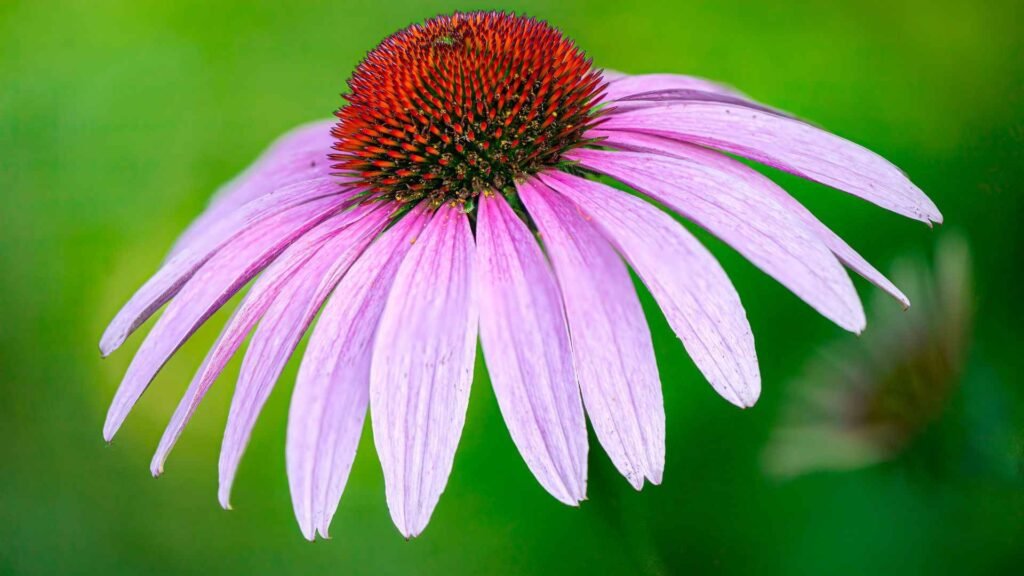
Purple coneflower is one of the most recognizable purple-flowering perennials. Its daisy-like flowers have slightly drooping petals surrounding a prominent raised central cone. The blooms attract pollinators and can also provide seeds for birds when mature flower heads are left standing.
- Bloom time: Summer, often extending into early fall
- Sunlight: Full sun to partial shade
- Soil: Average, well-drained soil
- Height: Usually around 2–5 feet, depending on cultivar
- Garden use: Mixed borders, prairie-style planting, and pollinator gardens
Purple coneflower tolerates some drought once established, although it performs best with adequate moisture during establishment. Avoid keeping its roots in constantly wet soil.
It is a particularly useful choice for gardeners who want summer color without demanding daily maintenance. Leaving some flower heads standing into winter can also provide food for seed-eating birds. UGA Cooperative Extension+1
2. English Lavender (Lavandula angustifolia)
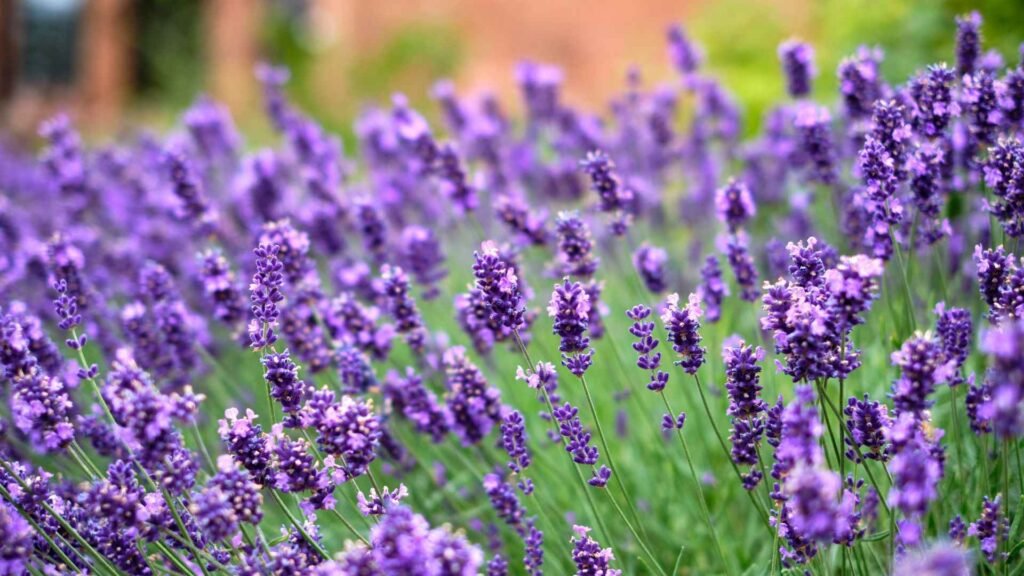
English lavender produces fragrant purple to violet flower spikes above compact, aromatic foliage. It works particularly well along paths, in sunny borders, and in gardens designed around fragrance and pollinators.
- Bloom time: Late spring through summer, depending on climate and cultivar
- Sunlight: Full sun
- Soil: Well-drained, preferably not overly rich
- Height: Commonly 1–3 feet
- Garden use: Edging, herb gardens, and fragrant borders
Drainage is one of the most important factors when growing lavender. Heavy, waterlogged soil can cause root problems, especially during winter. Choose a suitable hardy cultivar for your climate rather than assuming every lavender plant will survive outdoors year-round.
For a more compact garden, select a smaller named variety and give it enough room for air circulation.
3. Garden Phlox (Phlox paniculata)
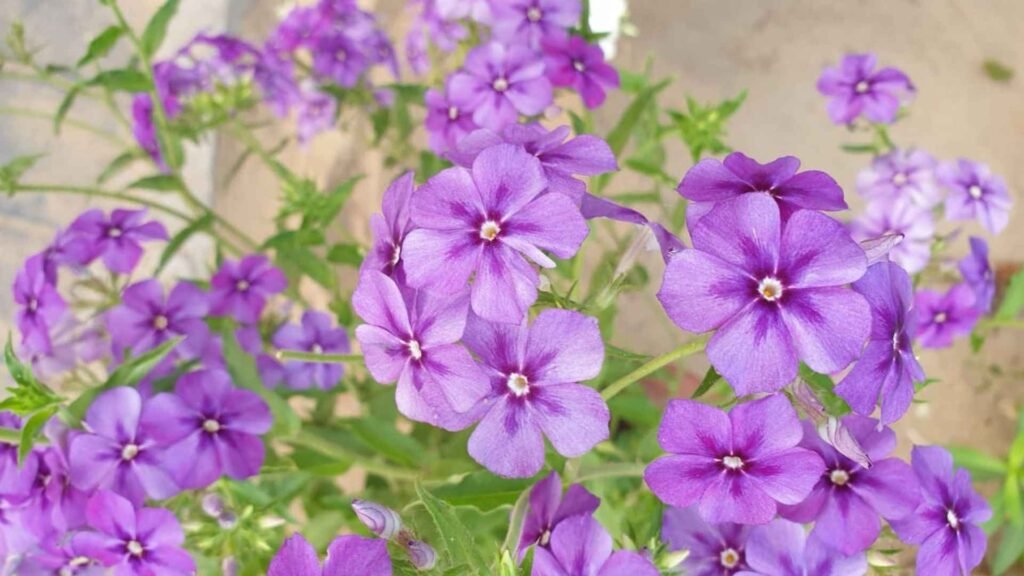
Garden phlox produces rounded clusters of flowers on upright stems. Purple and violet cultivars provide strong summer color, making this plant useful in cottage gardens and traditional perennial borders.
- Bloom time: Summer
- Sunlight: Full sun to partial shade
- Soil: Moist, fertile, well-drained soil
- Height: Often 2–4 feet
- Garden use: Cottage gardens, borders, and pollinator planting
Unlike lavender, garden phlox generally prefers more consistent soil moisture. Give plants enough spacing to encourage air movement, and avoid regularly wetting the foliage when watering.
Some cultivars are more resistant to powdery mildew than others. Choosing a suitable cultivar and providing good growing conditions can help reduce this common problem.
4. Meadow Sage (Salvia nemorosa)
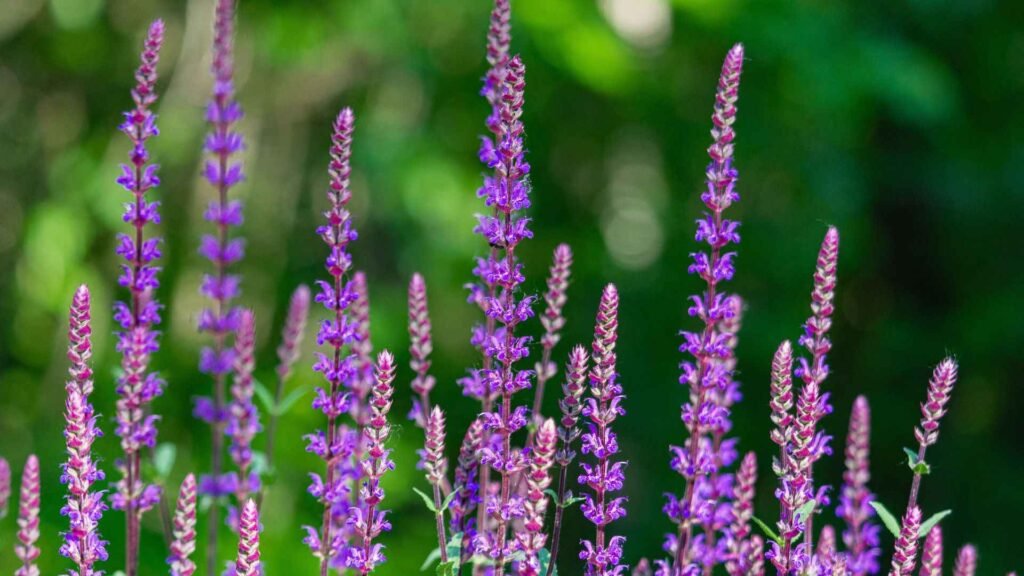
Meadow sage produces upright flower spikes in shades of violet, purple, and blue-purple. Its compact growth habit makes it useful near the front or middle of a sunny flower border.
- Bloom time: Late spring to summer, with possible repeat flowering
- Sunlight: Full sun
- Soil: Well-drained soil
- Height: Usually 1–2 feet, depending on cultivar
- Garden use: Borders, edging, and pollinator gardens
Cutting back faded flower spikes can encourage another flush of blooms in suitable conditions. Avoid excessive fertilizer, which can encourage leafy growth at the expense of flowers.
Named cultivars such as ‘Caradonna’ are useful when you want a particular flower color and a more predictable plant habit.
5. Catmint (Nepeta × faassenii)
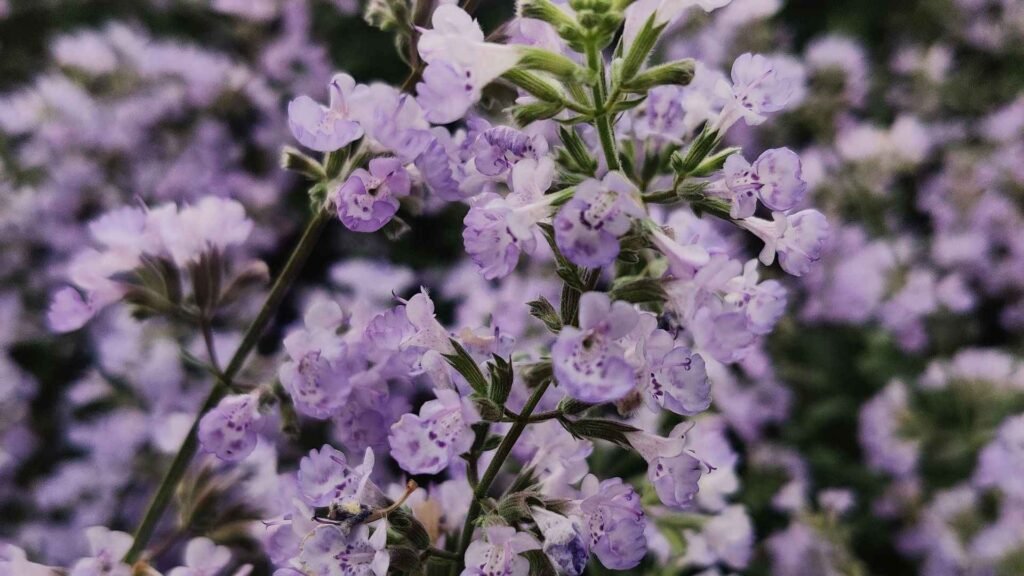
Catmint is a spreading perennial with soft, aromatic foliage and abundant lavender-blue to violet flower spikes. It is especially useful for filling the front of sunny borders and softening the edges of paths.
- Bloom time: Late spring into summer, sometimes repeating after trimming
- Sunlight: Full sun
- Soil: Well-drained soil
- Height: Commonly 1–2 feet
- Garden use: Low borders, edging, and pollinator gardens
After the first major flowering period, trimming the faded stems can encourage fresh foliage and additional flowers. Catmint is generally a good choice for gardeners who want a relaxed, informal appearance without extensive care.
Its color is often more lavender-blue than pure purple, so check the appearance of the named cultivar before buying it.
6. Blazing Star (Liatris spicata)
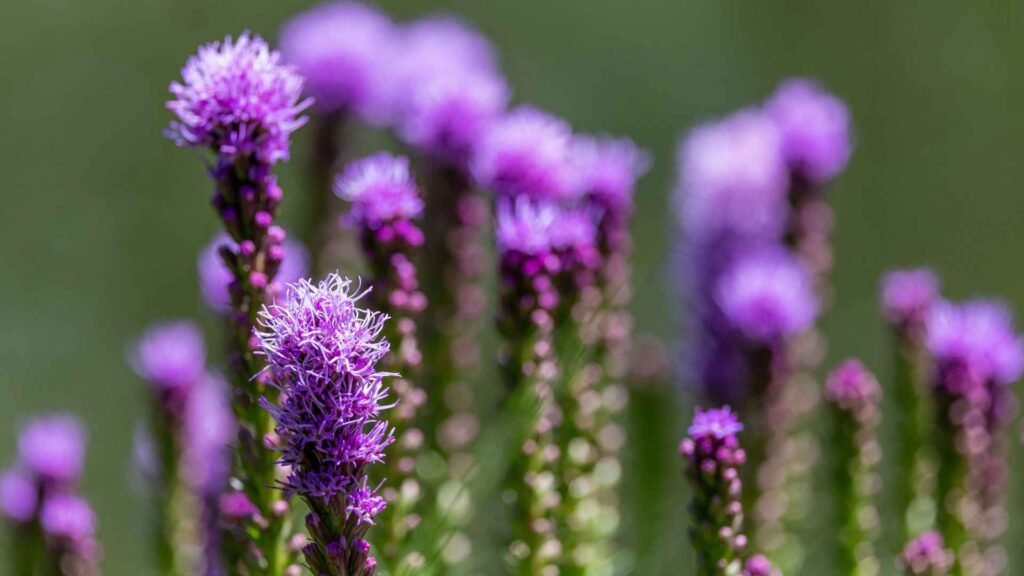
Blazing star stands out because its narrow, upright flower spikes create a different shape from the rounded flower heads of coneflowers and phlox. Its purple blooms are attractive to bees and butterflies.
- Bloom time: Summer
- Sunlight: Full sun
- Soil: Well-drained soil
- Height: Commonly 2–4 feet
- Garden use: Prairie gardens, borders, and pollinator planting
An interesting feature of blazing star is that its flower spikes open from the top downward, unlike many other flowering spikes that open from the bottom upward.
Plant it in a sunny location with good drainage. It can be particularly effective when planted in groups rather than as a single isolated specimen.
7. Siberian Iris (Iris sibirica)
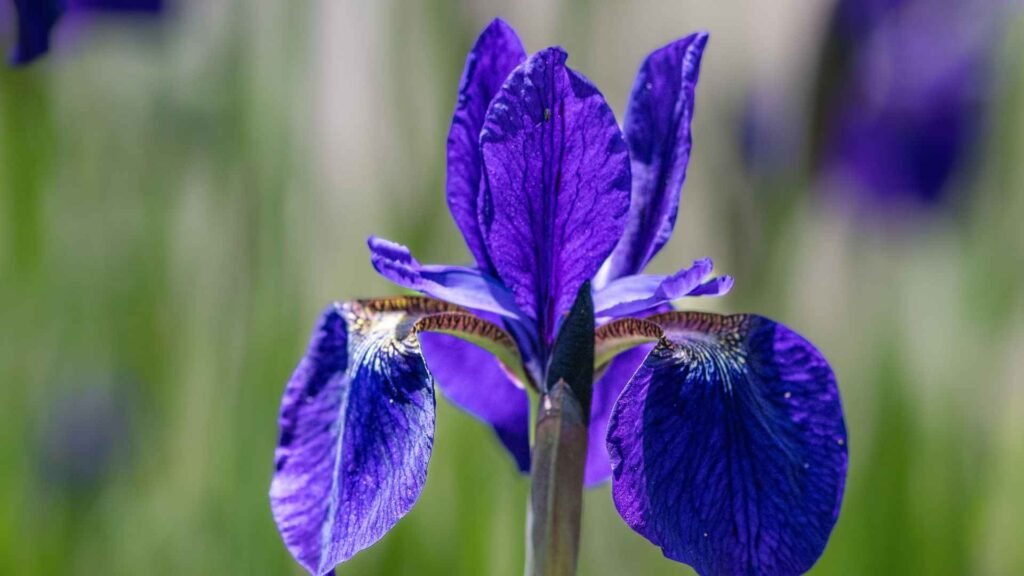
Siberian iris produces elegant flowers above narrow, grass-like foliage. Depending on the cultivar, its blooms may be deep purple, violet-blue, lavender, or white.
- Bloom time: Late spring to early summer
- Sunlight: Full sun to partial shade
- Soil: Moist, fertile soil with reasonable drainage
- Height: Often 2–4 feet
- Garden use: Pond edges, moist borders, and perennial beds
Siberian iris is a useful option for gardeners who want vertical flower interest without the large leaves of some other iris types. It generally appreciates consistent moisture, particularly during active growth.
Remove damaged foliage when necessary and divide crowded clumps when flowering begins to decline.
8. Balloon Flower (Platycodon grandiflorus)
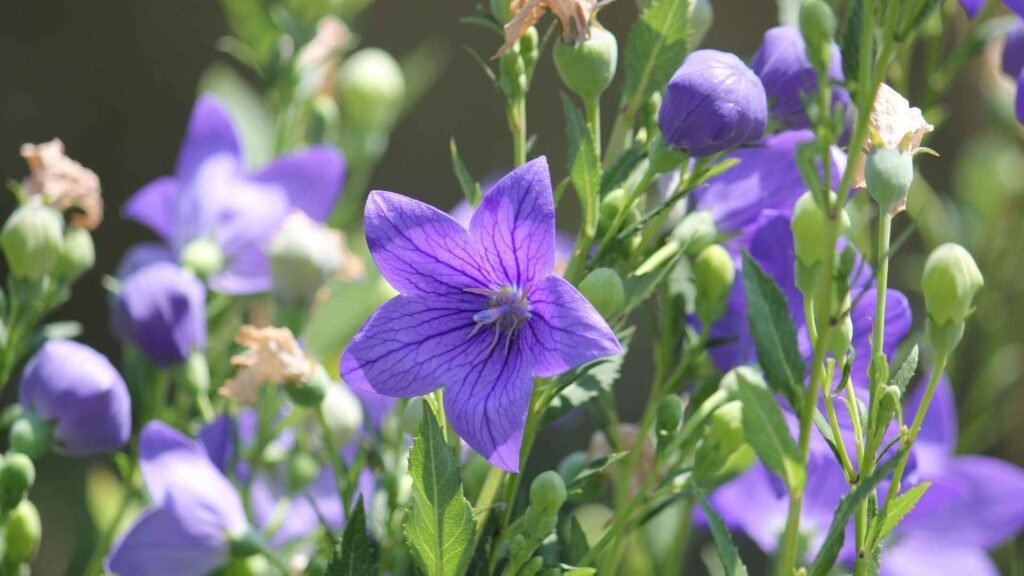
Balloon flower gets its common name from its rounded flower buds, which swell before opening into star-shaped blooms. Purple and blue-violet cultivars are popular choices for compact perennial borders.
- Bloom time: Summer
- Sunlight: Full sun to partial shade
- Soil: Well-drained soil
- Height: Usually 1–2 feet
- Garden use: Small borders, containers, and mixed beds
Its unusual buds make it interesting even before the flowers open. Balloon flower is relatively easy to grow once established, but it can be slow to emerge in spring.
Mark its planting location so you do not accidentally disturb the roots while working in the garden.
9. Hardy Geranium (Geranium species and cultivars)
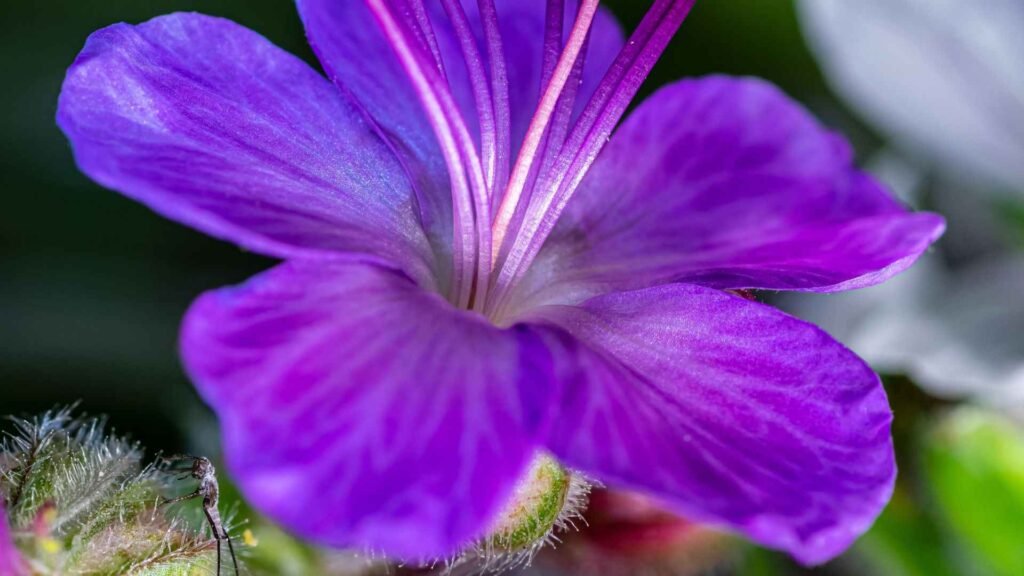
Hardy geraniums are a diverse group of perennial plants, many of which produce purple, violet, or blue-purple flowers. Some form compact clumps, while others spread to create attractive ground cover.
- Bloom time: Spring to summer, depending on species and cultivar
- Sunlight: Full sun to partial shade, depending on selection
- Soil: Most prefer reasonably well-drained soil
- Height: Varies considerably by species
- Garden use: Borders, woodland edges, and ground cover
Geranium × magnificum is one example with showy violet-purple flowers. Other hardy geraniums have different growth habits and flowering periods, so choosing a named variety is important.
Do not confuse hardy geraniums with tender bedding plants commonly called geraniums, which belong to the genus Pelargonium.
10. New England Aster (Symphyotrichum novae-angliae)
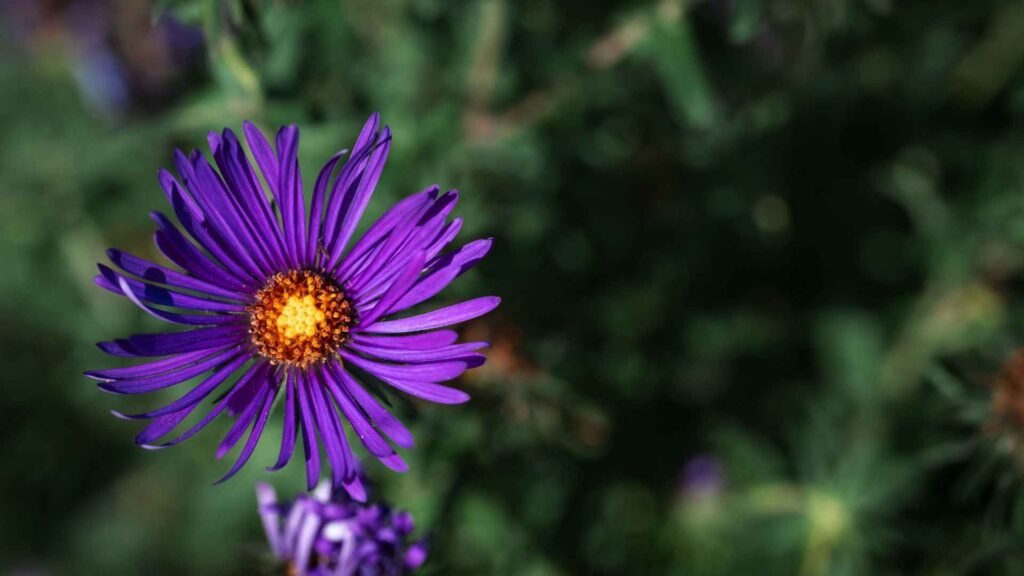
New England aster is a valuable late-season perennial. It produces masses of daisy-like flowers, often in rich purple or violet shades, when many summer-flowering plants are beginning to fade.
- Bloom time: Late summer through fall
- Sunlight: Full sun
- Soil: Moist to moderately dry soil, depending on conditions
- Height: Commonly 3–6 feet
- Garden use: Back of borders, meadow gardens, and pollinator beds
Its late flowering period makes it particularly useful for supporting pollinators when fewer flowers are available.
New England aster can become tall, so place it toward the back of a border or provide support if necessary. Cutting stems back earlier in the growing season can help produce a more compact plant, although it may also affect flowering time.
11. Anise Hyssop (Agastache foeniculum)
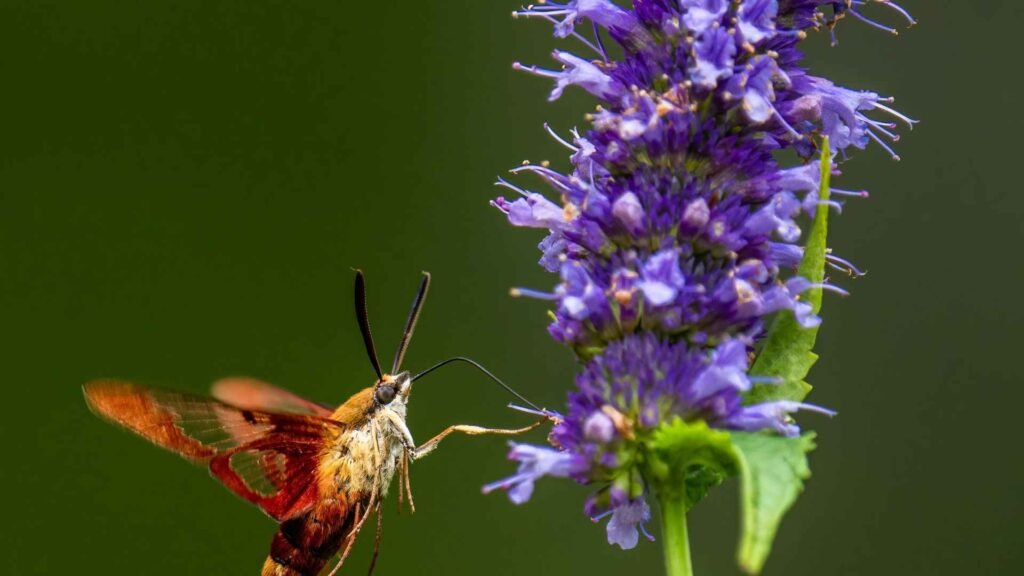
Anise hyssop is an aromatic perennial with upright flower spikes and foliage that releases a mild anise-like scent when crushed. Its purple flowers attract bees, butterflies, and other pollinators, making it a useful addition to wildlife-friendly gardens.
- Bloom time: Summer to early fall
- Sunlight: Full sun to partial shade
- Soil: Well-drained soil
- Height: Approximately 2–4 feet
- Garden use: Pollinator gardens, herb borders, and naturalistic planting
Anise hyssop is generally easier to grow in sunny locations with good drainage. Once established, it can tolerate periods of relatively dry weather. Avoid keeping the roots constantly wet.
Its upright flowers work well alongside coneflowers, ornamental grasses, and other summer-blooming perennials.
12. Columbine (Aquilegia vulgaris and related species)
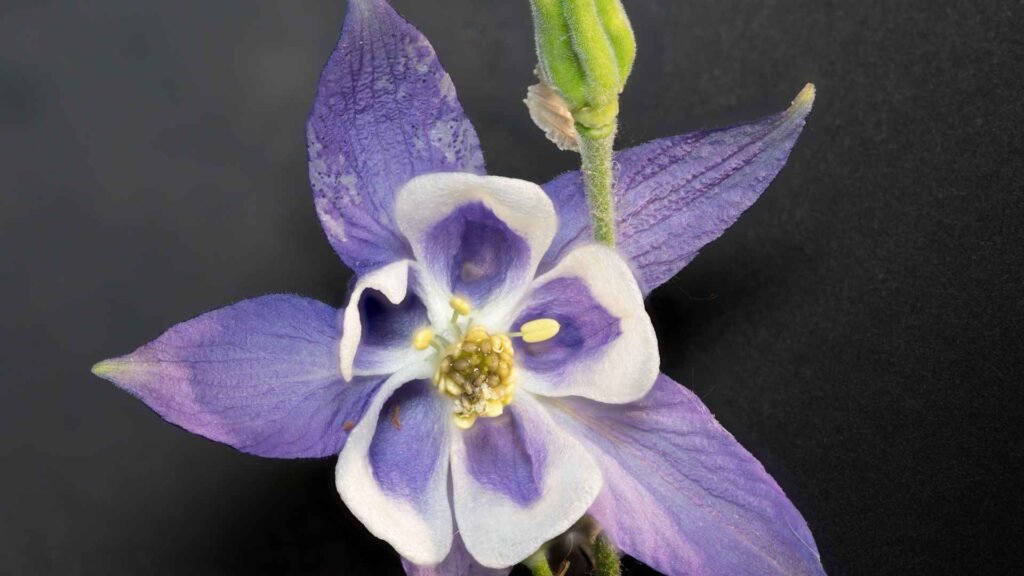
Columbine is known for its distinctive flowers, which have five petals and backward-pointing spurs. Purple cultivars provide an elegant appearance in cottage gardens and lightly shaded borders.
- Bloom time: Spring to early summer
- Sunlight: Partial shade to full sun in cooler conditions
- Soil: Moist, well-drained soil
- Height: Approximately 1–3 feet
- Garden use: Woodland edges, cottage gardens, and mixed borders
Columbines are particularly useful for bringing color to areas that receive morning sunlight and afternoon shade. They can also self-seed under suitable conditions, allowing new plants to appear around established clumps.
Different species and cultivars vary in flower color and growing requirements, so check the mature size and preferred climate before planting.
13. Creeping Phlox (Phlox subulata)
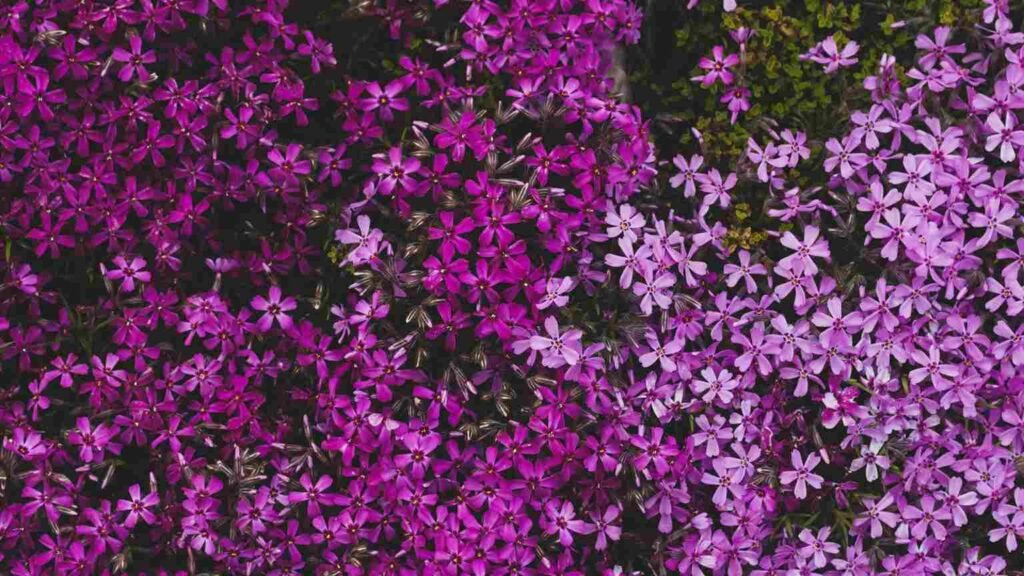
Creeping phlox is a low-growing perennial that creates a carpet of flowers during spring. Purple and lavender varieties are especially attractive when planted along garden edges, over slopes, or between rocks.
- Bloom time: Spring
- Sunlight: Full sun
- Soil: Well-drained soil
- Height: Approximately 4–6 inches
- Garden use: Rock gardens, slopes, and ground cover
Unlike tall garden phlox, creeping phlox spreads horizontally and forms a dense mat. Its flowers can cover much of the foliage during peak blooming.
Good drainage is important, particularly in winter. Avoid planting it in areas where water regularly collects.
14. Ornamental Allium (Allium species and cultivars)
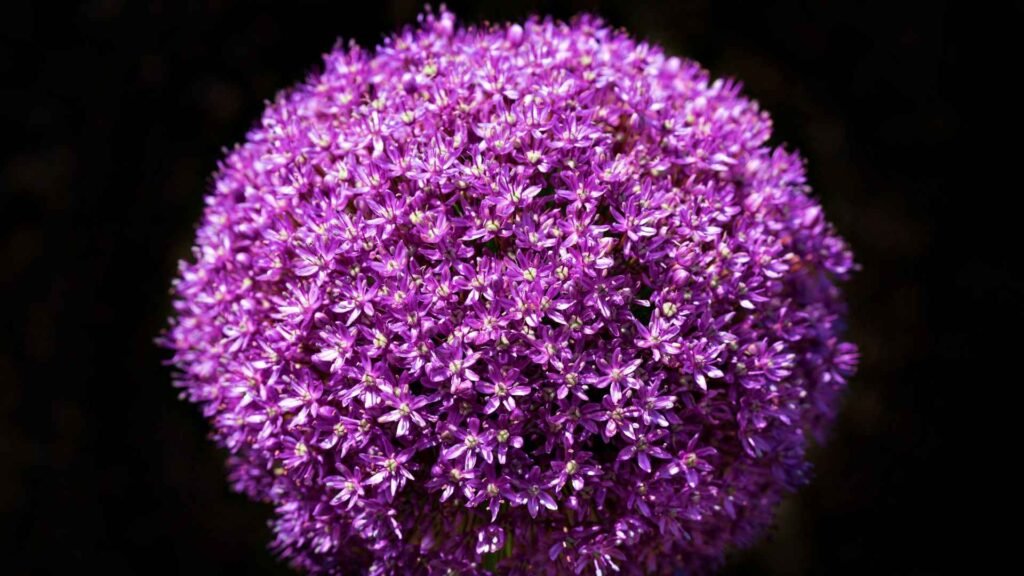
Ornamental alliums produce rounded flower heads made up of many small individual flowers. Their architectural shape creates a striking contrast with softer, more rounded perennials.
- Bloom time: Late spring to summer, depending on species
- Sunlight: Full sun
- Soil: Well-drained soil
- Height: Varies by species and cultivar
- Garden use: Mixed borders, formal beds, and pollinator planting
One useful named selection is Allium ‘Millenium’, a clump-forming ornamental onion with rounded purple flower clusters in summer.
Alliums are particularly effective when planted in groups. Their flower heads also provide visual interest after the petals fade.
Choose an ornamental species or cultivar suitable for your climate rather than assuming every allium has the same growth habit or flowering period.
15. Monkshood (Aconitum species)
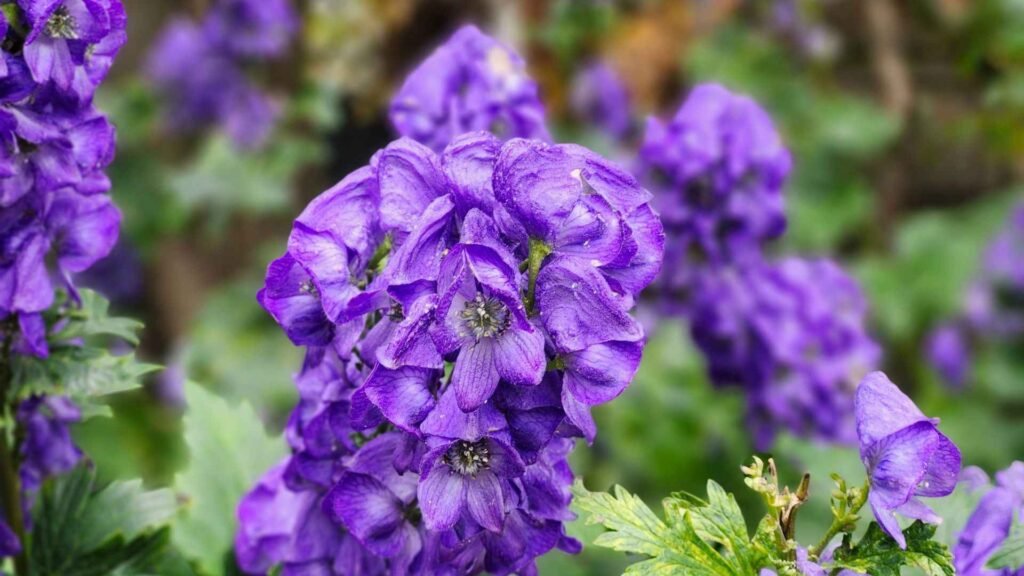
Monkshood produces tall flower spikes with unusual hood-shaped blooms, usually in deep violet or blue-purple shades. It is a distinctive option for cool, partly shaded perennial borders.
- Bloom time: Summer to early fall, depending on species
- Sunlight: Partial shade to full sun in cool conditions
- Soil: Moist, fertile, well-drained soil
- Height: Often 2–5 feet
- Garden use: Shaded borders and woodland-style planting
Monkshood is not an ordinary low-maintenance garden choice because it requires careful handling.
Important safety warning
All parts of monkshood contain highly toxic compounds. Ingestion can cause serious poisoning. Wear gloves when handling it, wash your hands afterward, and avoid planting it where children or pets could access it.
Gardeners with safety concerns should choose a non-toxic alternative such as purple coneflower or hardy geranium.
16. Great Blue Lobelia (Lobelia siphilitica)
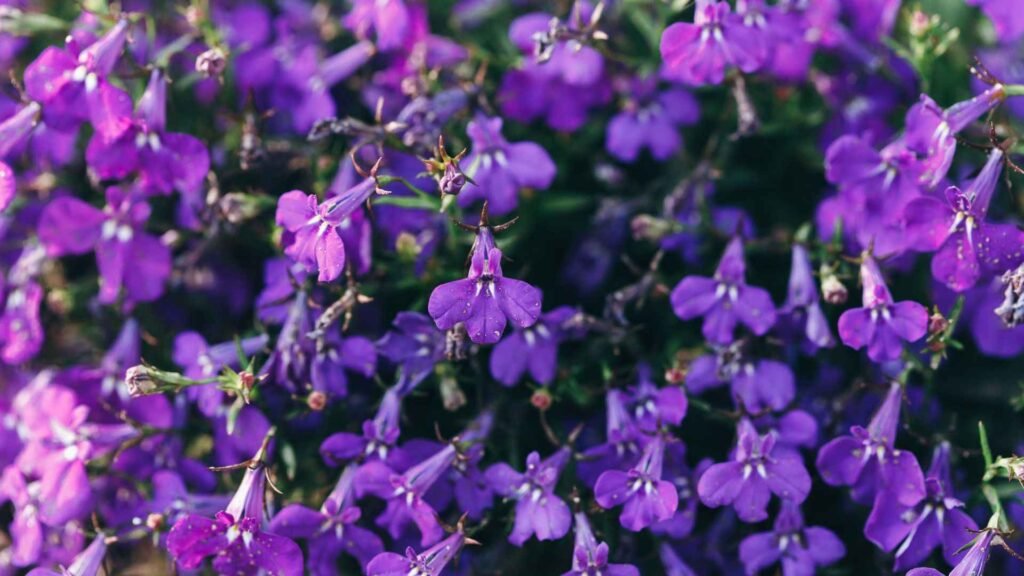
Great blue lobelia produces upright spikes of tubular flowers in violet-blue and purple-blue shades. It is a useful perennial for moist garden areas where many drought-tolerant plants struggle.
- Bloom time: Summer to early fall
- Sunlight: Full sun to partial shade
- Soil: Consistently moist soil
- Height: Approximately 2–4 feet
- Garden use: Rain gardens, pond edges, and moist borders
This plant is particularly suitable for gardens with naturally damp soil. Unlike lavender and Russian sage, it does not perform well in dry, sandy locations without regular moisture.
Its tubular flowers attract pollinators, including bees and hummingbirds in regions where they occur.
17. Russian Sage (Salvia yangii)
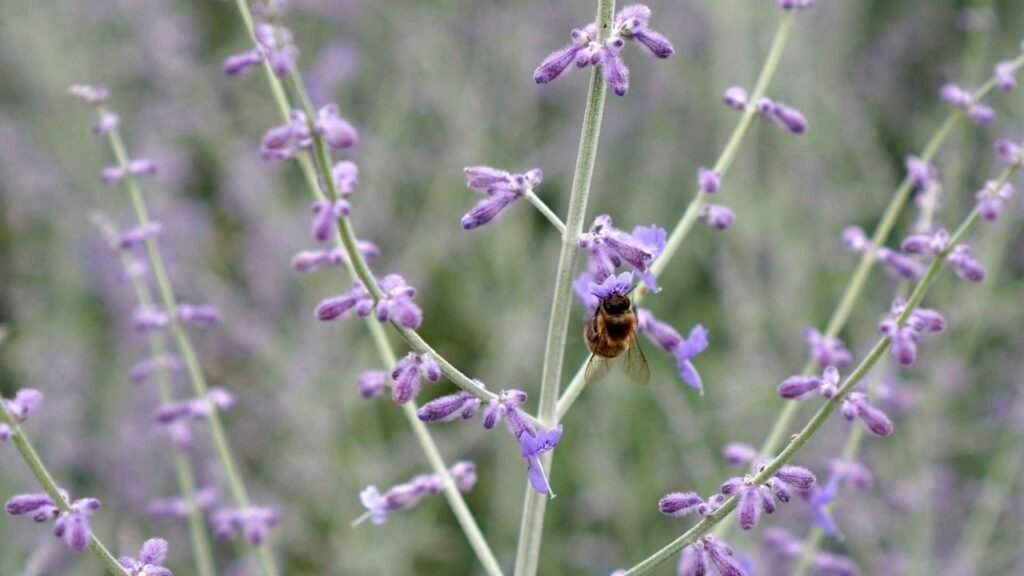
Russian sage is valued for its airy flower spikes, aromatic foliage, and ability to bring soft purple color to sunny gardens. Its flowers are usually lavender-blue to violet rather than a deep purple.
- Bloom time: Summer through fall
- Sunlight: Full sun
- Soil: Well-drained soil
- Height: Commonly 2–4 feet, depending on cultivar
- Garden use: Dry borders, gravel gardens, and large mixed beds
Russian sage is a good option for gardeners who want a relatively drought-tolerant perennial after establishment. It prefers open, sunny locations and can struggle in heavy, poorly drained soil.
Plant it with ornamental grasses, coneflowers, or other drought-tolerant perennials for a naturalistic effect.
18. Veronica (Veronica species and cultivars)
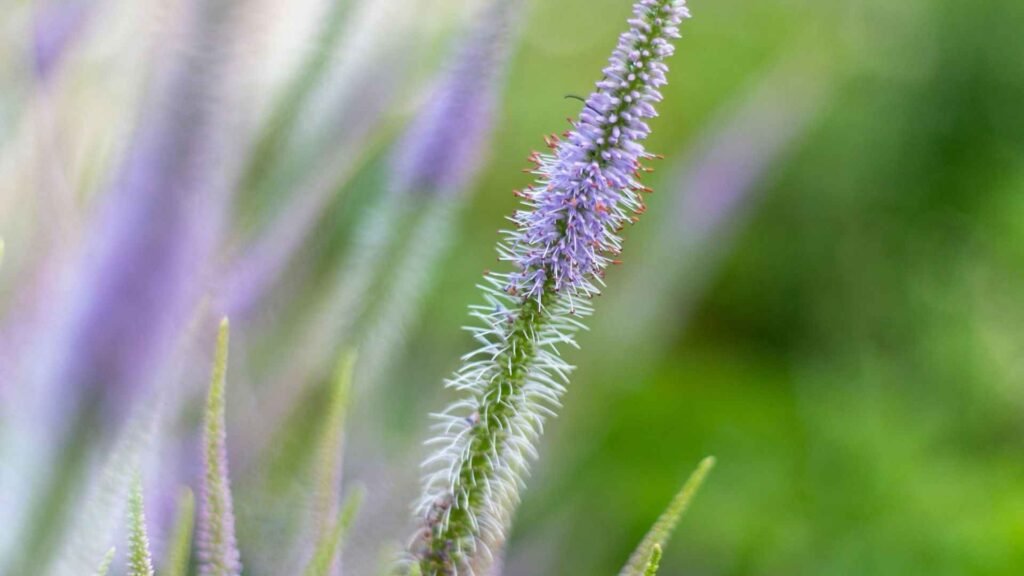
Veronica, commonly called speedwell, includes several perennial species and cultivars with upright purple or violet flower spikes. Its compact varieties are useful for adding color to the front and middle sections of a border.
- Bloom time: Late spring to summer, depending on cultivar
- Sunlight: Full sun
- Soil: Moist but well-drained soil
- Height: Commonly 1–2 feet
- Garden use: Borders, edging, and pollinator gardens
One popular choice is Veronica spicata, which has upright flower spikes and a relatively compact growth habit.
Removing faded flower spikes can improve the plant’s appearance and may encourage additional flowering in some cultivars.
19. Japanese Anemone (Anemone hupehensis and hybrids)
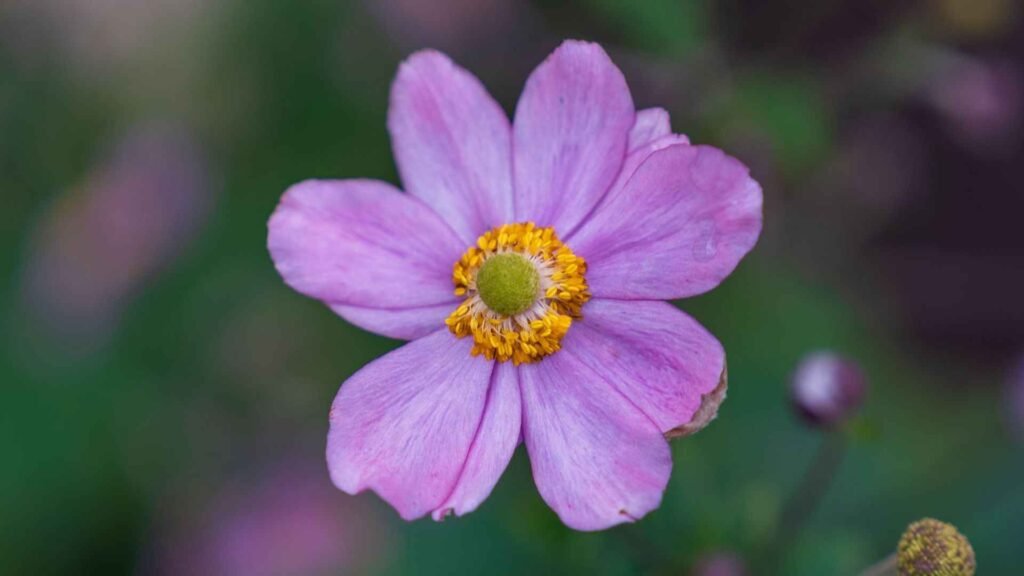
Japanese anemones are late-season perennials that bring delicate flowers to gardens when many summer plants are finishing their flowering periods. Their blooms are usually pink, mauve, or soft violet rather than true deep purple.
- Bloom time: Late summer through fall
- Sunlight: Partial shade to full sun in suitable climates
- Soil: Moist, fertile, well-drained soil
- Height: Commonly 2–4 feet
- Garden use: Woodland borders and late-season flower beds
Japanese anemones are particularly useful in gardens that need more color toward the end of the growing season.
Some varieties spread through underground stems and can become difficult to control in favorable conditions. Give them enough room and check the spreading habit of the cultivar before planting.
20. Jacob’s Ladder (Polemonium caeruleum)
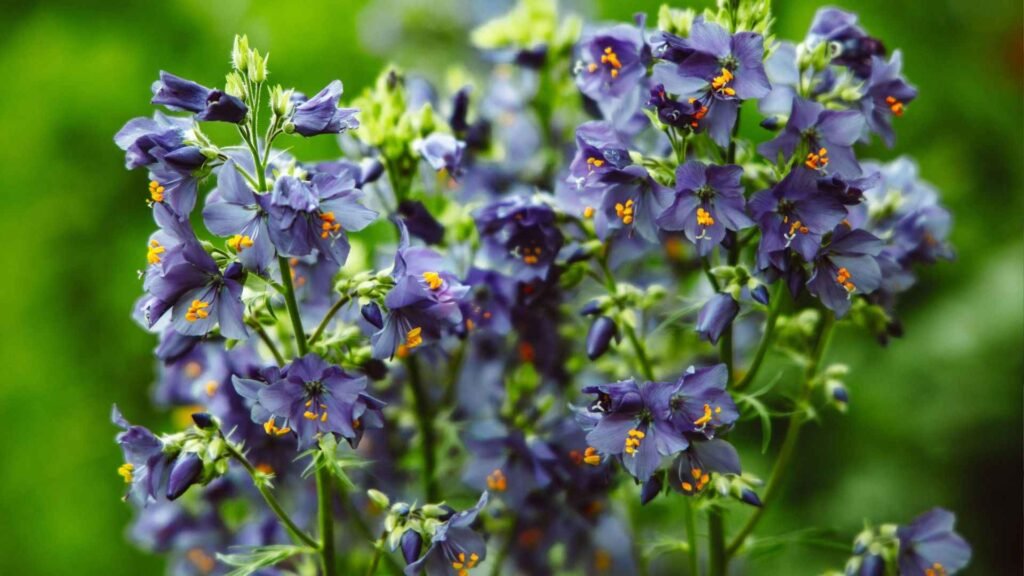
Jacob’s ladder is a graceful perennial with clusters of bell-shaped flowers and distinctive divided foliage. Its flowers generally appear in shades of violet-blue and lavender.
- Bloom time: Spring to early summer
- Sunlight: Partial shade
- Soil: Moist, fertile, well-drained soil
- Height: Approximately 1–2 feet
- Garden use: Woodland gardens, shaded borders, and cottage gardens
The plant’s fern-like foliage provides interest even when it is not flowering. It is especially useful in locations that receive filtered sunlight rather than intense afternoon heat.
Keep the soil evenly moist during dry weather, and remove faded flower stems if you want to maintain a tidy appearance.
21. Bee Balm (Monarda species and cultivars)
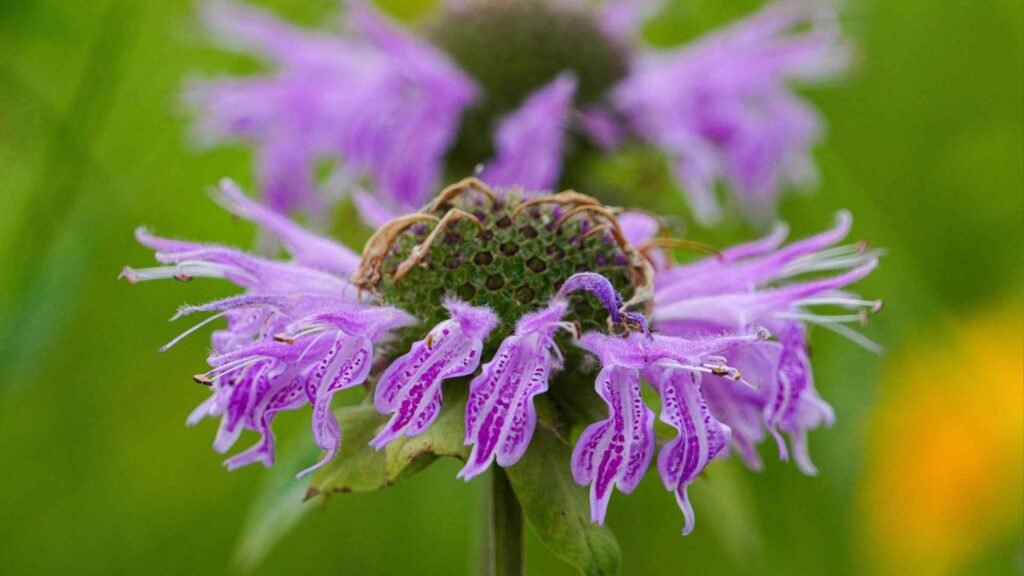
Bee balm produces unusual, shaggy-looking flower heads that attract bees, butterflies, and hummingbirds. Several species and cultivars produce purple or violet blooms.
- Bloom time: Summer
- Sunlight: Full sun to partial shade
- Soil: Moist, fertile, well-drained soil
- Height: Often 2–4 feet
- Garden use: Pollinator gardens, cottage gardens, and perennial borders
Bee balm is particularly valuable when attracting pollinators is an important garden goal. Its unusual flower structure also adds variety to mixed planting schemes.
Powdery mildew can affect some varieties, especially where plants are crowded or air circulation is poor. Select mildew-resistant cultivars when possible and provide adequate spacing.
22. Delphinium (Delphinium species and hybrids)
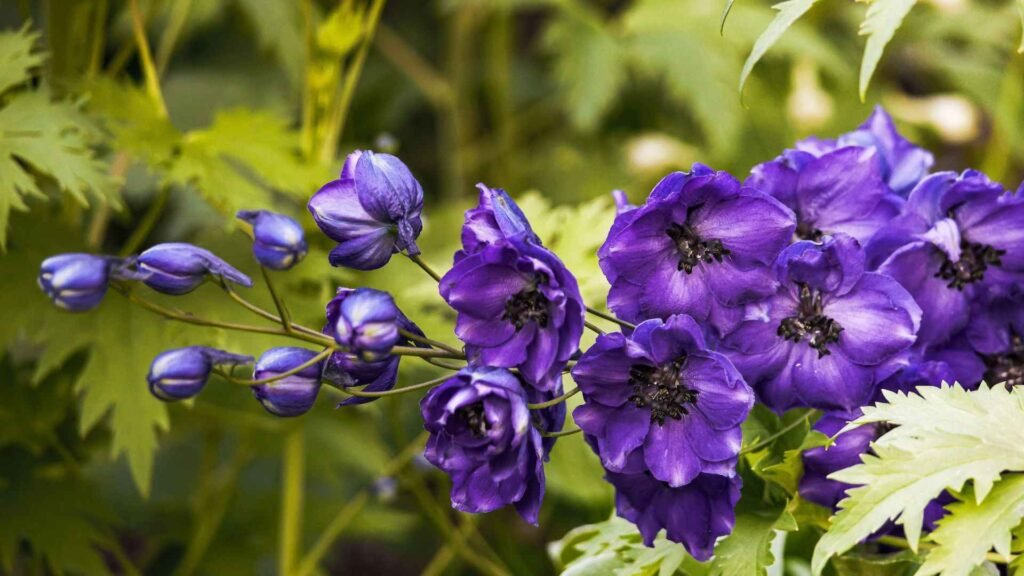
Delphiniums are known for their impressive vertical flower spikes, which can create a dramatic background in a traditional perennial border. Purple and violet cultivars are particularly striking.
- Bloom time: Late spring to summer, depending on cultivar and climate
- Sunlight: Full sun with suitable growing conditions
- Soil: Fertile, moist, well-drained soil
- Height: Often 2–6 feet or taller
- Garden use: Cottage gardens and tall flower borders
Delphiniums usually perform best in cooler climates with good soil moisture and protection from strong winds. Taller varieties may require staking to prevent their flower spikes from bending or breaking.
Safety warning
Delphiniums contain toxic compounds. Do not allow people or animals to eat the plant, and wear gloves when handling large amounts of foliage.
23. Blue False Indigo (Baptisia australis)
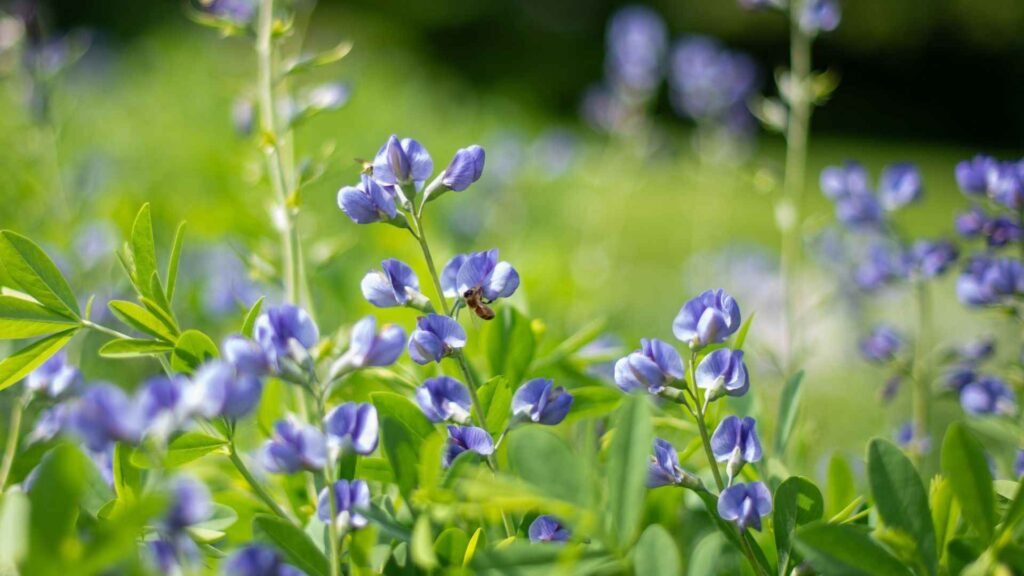
Blue false indigo is a long-lived perennial with upright clusters of pea-like flowers, attractive foliage, and decorative seed pods. Its flowers are typically blue-violet to purple-blue.
- Bloom time: Late spring to early summer
- Sunlight: Full sun to partial shade
- Soil: Well-drained soil
- Height: Commonly 3–4 feet
- Garden use: Native plant gardens, borders, and naturalistic landscapes
One of its biggest advantages is its long-term structure. Once established, blue false indigo develops into a substantial clump that can remain attractive for many years.
It has a deep root system and does not like being moved frequently, so choose its planting location carefully.
24. Bellflower (Campanula persicifolia)
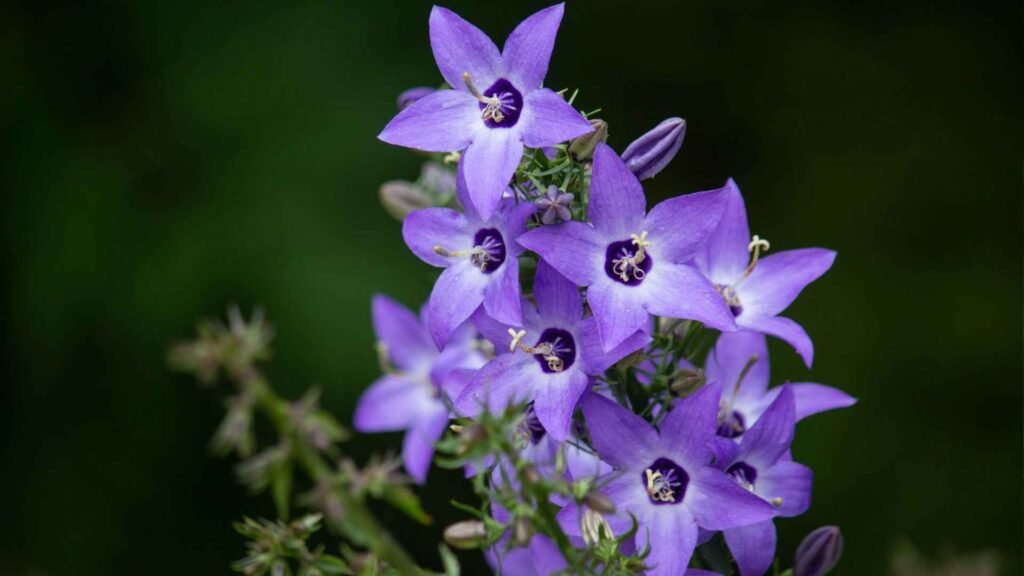
Peach-leaved bellflower produces elegant, cup-shaped flowers along upright stems. Purple and violet cultivars bring a softer appearance to cottage gardens and mixed perennial borders.
- Bloom time: Late spring to summer
- Sunlight: Full sun to partial shade
- Soil: Moist, well-drained soil
- Height: Approximately 1–3 feet
- Garden use: Cottage gardens, borders, and cutting gardens
Its narrow foliage and upright flower stems make it easy to combine with other perennial plants.
Remove faded flowers to improve appearance and potentially extend the flowering period. Some cultivars may self-seed, so remove unwanted seedlings when necessary.
25. Clematis (Clematis viticella cultivars)
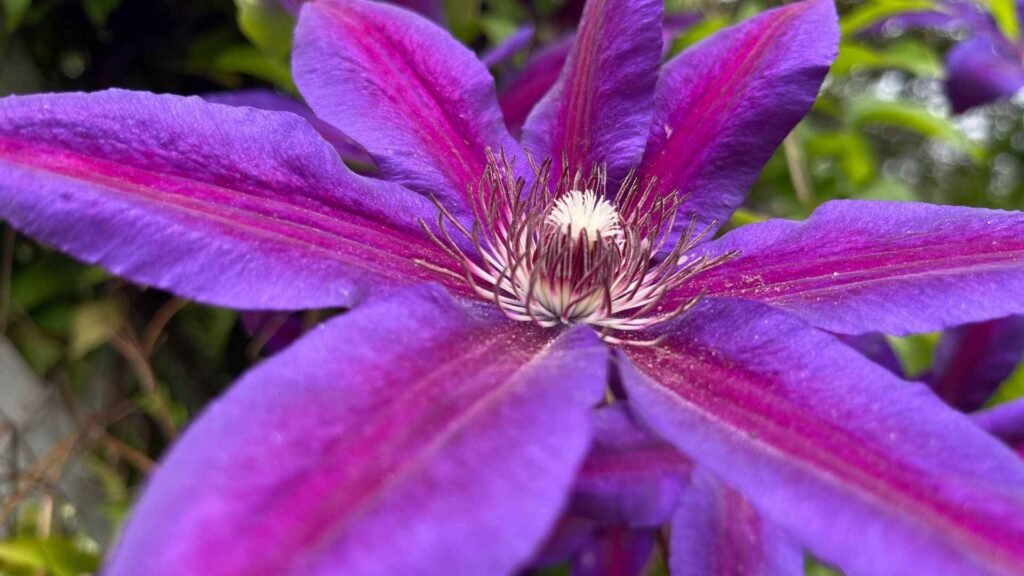
Clematis viticella cultivars produce attractive purple and violet flowers on climbing stems. Unlike the clump-forming perennials in this list, these plants need a support structure such as a trellis, fence, or garden arch.
- Bloom time: Summer into early fall, depending on cultivar
- Sunlight: Usually full sun to partial shade
- Soil: Moist, well-drained soil
- Height: Several feet or more, depending on cultivar and support
- Garden use: Trellises, fences, arches, and vertical garden spaces
Clematis viticella is a useful choice when you want to add purple flowers vertically instead of using more ground space.
Its climbing habit makes it especially effective near seating areas, garden entrances, and fences. Follow the pruning requirements of the specific cultivar, as clematis pruning groups differ.
Quick Selection Guide: Which Purple Perennial Should You Choose?
| Your garden requirement | Suitable choices |
|---|---|
| Sunny, dry garden | English lavender, Russian sage, meadow sage |
| Pollinator-friendly garden | Purple coneflower, bee balm, blazing star |
| Partly shaded garden | Columbine, Jacob’s ladder, hardy geranium |
| Moist garden soil | Great blue lobelia, Siberian iris, garden phlox |
| Spring flowers | Creeping phlox, columbine, Jacob’s ladder |
| Summer flowers | Salvia, catmint, delphinium, balloon flower |
| Late-season flowers | New England aster, Japanese anemone, Russian sage |
| Vertical garden interest | Delphinium, blazing star, clematis |
How to Choose the Right Purple Perennial Flowers
Before purchasing plants, consider the conditions in your garden. A flower that performs beautifully in one location may struggle in another because of differences in sunlight, drainage, temperature, and soil moisture.
1. Check Your Sunlight Conditions
Sunlight is one of the most important factors affecting perennial growth and flowering.
- Full sun: Lavender, Russian sage, meadow sage, and purple coneflower generally perform well in sunny locations.
- Partial shade: Columbine, Jacob’s ladder, and some hardy geraniums are useful choices for areas receiving less direct sunlight.
- Moist, partly shaded areas: Great blue lobelia and suitable Siberian iris varieties can work well.
2. Consider Your Soil Type
Different perennials have different soil preferences.
| Soil condition | Suitable plants |
|---|---|
| Sandy, well-drained soil | Lavender, Russian sage |
| Average garden soil | Purple coneflower, meadow sage |
| Moist, fertile soil | Garden phlox, bee balm |
| Consistently moist soil | Great blue lobelia, Siberian iris |
| Rocky or gravelly soil | Creeping phlox, suitable salvias |
Improving drainage is particularly important for plants such as lavender, which can suffer when their roots remain wet.
3. Select Plants According to Mature Height
A well-designed flower bed should have layers rather than placing every plant at the same height.
- Front of the border: Creeping phlox, compact catmint, and low-growing hardy geraniums.
- Middle of the border: Meadow sage, balloon flower, and purple coneflower.
- Back of the border: Delphinium, New England aster, and tall garden phlox.
Allow enough space for plants to reach their mature width. Crowded plants often have poorer air circulation and may require more maintenance.
4. Choose Different Flowering Periods
A garden containing only summer-flowering perennials may have very little color during spring or fall.
Consider combining:
- Spring: Creeping phlox, columbine, and Jacob’s ladder.
- Early summer: Siberian iris, meadow sage, and blue false indigo.
- Summer: Purple coneflower, lavender, garden phlox, and blazing star.
- Late summer and fall: New England aster, Japanese anemone, and Russian sage.
Bloom periods vary by climate and cultivar, but this approach helps create a longer flowering season. me summer-flowering varieties are better divided in spring.
Common Mistakes to Avoid When Growing Purple Perennials
Even suitable plants can struggle when their growing requirements are overlooked.
Choosing Plants Only for Their Flower Color
A beautiful purple flower may not be suitable for your climate or soil. Always check its mature size, sunlight requirements, moisture preferences, and hardiness.
Overwatering Drought-Tolerant Varieties
Lavender and Russian sage are examples of plants that can suffer in consistently wet soil. Water according to the plant’s needs rather than following one schedule for every flower.
Planting Without Considering Mature Size
Small nursery plants can grow into substantial clumps. Leaving insufficient space can cause overcrowding and reduce air circulation.
Ignoring Flowering Seasons
Planting only summer-blooming flowers can leave a garden without much color during spring and fall. Combine early-, mid-, and late-season perennials.
Ignoring Invasive or Aggressive Growth
Some perennial plants spread rapidly through underground stems or self-seeding. Check their growth habits before planting them near natural areas or small garden beds.
For example, creeping bellflower (Campanula rapunculoides) can become invasive in some regions and should not be confused with more manageable ornamental bellflowers.
Choosing Toxic Plants Without Considering Safety
Monkshood and delphinium contain toxic compounds. Avoid planting them where children or pets may accidentally ingest them, and handle them carefully.
Frequently Asked Questions About Purple Perennial Flowers
1. What are the best purple perennial flowers for a garden?
Some popular choices include purple coneflower, English lavender, meadow sage, garden phlox, catmint, blazing star, and New England aster. The best selection depends on your sunlight, soil, climate, and desired flowering period.
2. Which purple perennial flowers bloom all summer?
English lavender, catmint, meadow sage, and some garden phlox cultivars can provide extended summer flowering. Their bloom periods depend on climate, cultivar, and maintenance. Deadheading or trimming may encourage additional flowers in certain varieties.
3. What are the easiest purple perennials to grow?
Purple coneflower, meadow sage, catmint, and suitable hardy geraniums are often manageable choices for home gardens. They still need appropriate soil, sunlight, and watering during establishment.
4. Which purple perennial flowers grow well in shade?
Columbine, Jacob’s ladder, and some hardy geraniums are suitable for partly shaded locations. Great blue lobelia can also work in moist areas with partial shade.
Few purple-flowering perennials perform well in deep, dry shade, so check the requirements of individual species.
5. Are purple coneflowers perennial?
Yes. Purple coneflower (Echinacea purpurea) is a herbaceous perennial. It generally dies back or becomes dormant during winter and produces new growth during the next growing season in suitable climates.
6. Do lavender plants come back every year?
English lavender is a perennial subshrub and can return for many years in suitable climates. Its winter survival depends on cultivar hardiness, drainage, and local temperatures.
7. Which purple perennials attract butterflies and bees?
Purple coneflower, meadow sage, bee balm, blazing star, anise hyssop, and New England aster are valuable choices for pollinator-friendly gardens.
Planting several species with different flowering periods can provide food sources over a longer part of the growing season.
8. Can purple perennial flowers grow in pots?
Yes. Compact varieties of lavender, catmint, balloon flower, and some hardy geraniums can grow in containers.
Choose a container with drainage holes and enough space for the mature root system. Remember that container plants may need more frequent watering than plants growing in the ground.
9. What is the tallest purple perennial flower?
Some delphinium varieties and New England asters can grow several feet tall. Their mature height depends on the cultivar, climate, and growing conditions.
10. Which purple perennials bloom in fall?
New England aster, Japanese anemone, and Russian sage can provide late-season flowers. Some varieties of monkshood also bloom in late summer and fall.
11. Are purple perennial flowers good for pollinators?
Many are excellent pollinator plants. Purple coneflower, bee balm, blazing star, salvia, and anise hyssop attract different bees, butterflies, and other beneficial insects.
12. How long do purple perennial flowers live?
Their lifespan varies considerably. Some, such as blue false indigo, can remain in a garden for many years, while other perennials may need dividing or replacement sooner. Growing conditions and plant health make a significant difference.
Final Thoughts
Purple perennial flowers can bring lasting color, texture, and seasonal interest to almost any suitable garden. Whether you prefer the fragrant spikes of English lavender, the distinctive flowers of purple coneflower, the vertical shape of blazing star, or the late-season blooms of New England aster, there are many varieties to consider.
The best garden design combines plants with different heights, flowering periods, and growing requirements. Choose varieties that suit your sunlight and soil conditions, give them enough room to mature, and maintain them according to their individual needs.
If you want a garden that remains attractive throughout the growing season, combine spring-, summer-, and fall-flowering purple perennials rather than relying on a single variety.
With thoughtful selection and proper care, these plants can create a colorful and welcoming garden that returns with fresh growth year after year.