
Perennial Flowers That Bloom Every Year
Introduction
Perennial flowers are some of the most valuable plants you can add to a garden. Unlike annuals, which complete their life cycle in one growing season, perennials can return year after year when grown in suitable conditions. Many become larger and more impressive as they establish, making them an excellent choice for long-term flower beds, borders, cottage gardens, and pollinator-friendly landscapes.
The best perennial flowers that bloom every year offer reliable flowers, attractive foliage, and relatively low maintenance. Some bloom for only a few weeks but create spectacular seasonal displays, while others flower repeatedly throughout summer and into fall.
Choosing the right perennial depends on your climate, sunlight, soil, and desired maintenance level. A flower that thrives in a cool, moist garden may struggle in a hot, dry location. By selecting plants suited to your conditions, you can create a garden that returns with fresh color every year.
In this guide, you’ll discover 25 perennial flowers that bloom every year, compare their main features, and learn which options are best for beginners, pollinators, full sun, long blooming periods, and low-maintenance gardens.
Quick Answer
Some of the best perennial flowers that bloom every year include Coneflowers, Daylilies, Peonies, Black-Eyed Susans, Coreopsis, Lavender, Salvia, Yarrow, Shasta Daisies, Phlox, Bee Balm, Russian Sage, Sedum, Astilbe, Hellebores, Columbine, Bleeding Heart, Lupine, Delphinium, Garden Phlox, Japanese Anemone, Gaura, Blanket Flower, Veronica, and Asters.
These perennials can return for multiple years when planted in suitable climates and given proper care.
Quick Comparison
- Best Overall: Coneflower
- Best Low-Maintenance: Daylily
- Best for Long-Term Growth: Peony
- Best for Pollinators: Bee Balm
- Best Drought Tolerance: Lavender
- Best Long Blooming: Coreopsis
- Best for Shade: Astilbe
- Best Fall Bloomer: Aster
Comparison Table
| Flower | Main Bloom Season | Light Requirement | Best Feature |
|---|---|---|---|
| Coneflower | Summer–Fall | Full Sun | Pollinator friendly |
| Daylily | Summer | Full Sun–Partial Shade | Easy care |
| Peony | Late Spring–Early Summer | Full Sun | Large fragrant blooms |
| Black-Eyed Susan | Summer–Fall | Full Sun | Low maintenance |
| Coreopsis | Summer–Fall | Full Sun | Long blooming |
| Lavender | Summer | Full Sun | Fragrance |
| Salvia | Summer–Fall | Full Sun | Hummingbird attraction |
| Yarrow | Summer | Full Sun | Drought tolerance |
| Shasta Daisy | Summer | Full Sun | Classic flowers |
| Phlox | Summer | Full Sun–Partial Shade | Colorful clusters |
Detailed Guide
1. Coneflower
Coneflower (Echinacea species) is one of the most reliable perennial flowers for returning year after year. Its large daisy-like blooms and raised central cones add color and texture to gardens throughout summer and, depending on the variety, into early fall.
Coneflowers are also highly valued for attracting bees, butterflies, and other pollinators.
Why Coneflowers Are a Top Choice
They offer:
- Reliable perennial growth
- Long summer flowering
- Drought tolerance after establishment
- Strong pollinator appeal
- Attractive seed heads
Growing Tips
For the best results:
- Plant in full sun.
- Use well-drained soil.
- Water regularly during the first growing season.
- Avoid overly wet conditions.
- Divide overcrowded clumps when necessary.
Leaving some seed heads in place can provide food for birds and add winter interest.
2. Daylily
Daylilies (Hemerocallis species) are among the easiest perennial flowers to grow. Although each individual flower usually lasts only one day, mature plants produce numerous buds, creating a colorful display over several weeks.
Reblooming varieties can extend the flowering period even further.
Why Daylilies Return Reliably
Daylilies are valued for their:
- Easy-care nature
- Strong adaptability
- Large colorful flowers
- Reliable perennial growth
- Ability to form expanding clumps
Growing Conditions
Daylilies grow best with:
- Full sun for maximum flowering
- Fertile, well-drained soil
- Moderate watering
- Occasional division of mature clumps
They can also tolerate partial shade, although flowering may be reduced.
3. Peony
Peonies (Paeonia species) are famous for their large, luxurious blooms and exceptional longevity. Once established, a healthy peony can remain productive for many years with relatively little disturbance.
Their flowers may be single, semi-double, double, or highly fragrant, depending on the variety.
Why Peonies Are Special
Peonies provide:
- Large, showy blooms
- Long-lived perennial growth
- Fragrant varieties
- Attractive foliage
- Strong garden presence
Growing Tips
For successful growth:
- Plant in full sun.
- Use fertile, well-drained soil.
- Avoid planting too deeply.
- Provide support for heavy flower heads if needed.
- Avoid moving established plants unless necessary.
Peonies may take time to establish, but they can reward gardeners with dependable blooms for many years.

4. Black-Eyed Susan
The Black-Eyed Susan (Rudbeckia species) is a cheerful perennial known for its golden-yellow petals surrounding a dark central cone.
It is a dependable choice for sunny gardens and can provide flowers from midsummer into fall.
Why It’s Easy to Grow
Black-Eyed Susans offer:
- Long flowering periods
- Strong drought tolerance
- Pollinator attraction
- Easy maintenance
- Reliable perennial growth
Growing Conditions
For the best performance:
- Plant in full sun.
- Use average, well-drained soil.
- Water during prolonged drought.
- Remove faded flowers to encourage continued blooming.
Some types can spread or self-seed, creating larger naturalized displays over time.
5. Coreopsis
Coreopsis (Coreopsis species), often called Tickseed, is a bright and cheerful perennial with one of the longest flowering seasons among common garden plants.
Its daisy-like flowers are available in shades of yellow, orange, red, pink, and bicolor combinations.
Why Gardeners Love Coreopsis
Coreopsis provides:
- Long-lasting blooms
- Excellent heat tolerance
- Drought resistance after establishment
- Pollinator-friendly flowers
- Low-maintenance growth
Growing Tips
Coreopsis performs best in:
- Full sun
- Well-drained soil
- Moderate watering
- Areas without excessive fertilizer
Deadheading can encourage additional flowering and help extend the bloom period.
6. Lavender
Lavender (Lavandula species) is a classic perennial valued for its fragrant purple flower spikes and silvery-green foliage.
It is especially useful in sunny, dry gardens and Mediterranean-style landscapes.
Why Lavender Returns Every Year
Lavender offers:
- Fragrant flowers and foliage
- Drought tolerance
- Pollinator appeal
- Attractive evergreen or semi-evergreen growth in suitable climates
- Low-maintenance care once established
Growing Conditions
Lavender thrives with:
- Full sun
- Excellent drainage
- Sandy or gravelly soil
- Moderate to low watering
Heavy, constantly wet soil is one of the main causes of poor performance, especially during winter.
7. Salvia
Salvia (Salvia species) includes many perennial varieties that return year after year and produce colorful flower spikes for an extended season.
The flowers are especially attractive to hummingbirds, butterflies, and bees.
Why Salvia Is a Garden Favorite
Perennial salvias provide:
- Long flowering periods
- Excellent pollinator value
- Heat tolerance
- Drought resistance after establishment
- Easy maintenance
Growing Tips
For the best results:
- Plant in full sun.
- Use well-drained soil.
- Water regularly while establishing.
- Remove faded flower spikes.
- Avoid excessive fertilizer.
Cutting back spent flower stems can encourage some varieties to produce another flush of blooms.
8. Yarrow
Yarrow (Achillea millefolium) is a tough perennial with flat clusters of tiny flowers held above attractive fern-like foliage.
It is particularly valuable for gardeners looking for a drought-tolerant plant that can return reliably with little maintenance.
Why Yarrow Is So Dependable
Yarrow offers:
- Strong drought tolerance
- Long-lasting flower clusters
- Pollinator-friendly blooms
- Attractive foliage
- Useful cut and dried flowers
Growing Conditions
Yarrow grows best in:
- Full sun
- Well-drained soil
- Moderate to low watering
- Lean or average soil
Too much fertilizer can lead to weak, floppy growth.
9. Shasta Daisy
Shasta Daisy (Leucanthemum × superbum) is a classic perennial flower known for its bright white petals and cheerful yellow centers. It returns year after year and brings a clean, timeless appearance to sunny borders, cottage gardens, and cutting gardens.
Depending on the variety and growing conditions, Shasta Daisies typically bloom from early or midsummer into late summer.
Why Shasta Daisies Are a Great Choice
They offer:
- Reliable perennial growth
- Bright, classic flowers
- Long summer blooming
- Excellent cut flowers
- Pollinator appeal
Growing Tips
For the best results:
- Plant in full sun.
- Use fertile, well-drained soil.
- Water during extended dry periods.
- Remove faded flowers to encourage continued blooming.
- Divide mature clumps every few years.
10. Phlox
Phlox (Phlox species) is a colorful perennial that produces clusters of fragrant flowers throughout the summer. Garden phlox is especially popular for adding height and vibrant color to perennial borders.
Flower colors include pink, purple, white, red, and lavender.
Why Phlox Returns Every Year
Phlox provides:
- Reliable perennial growth
- Large clusters of colorful flowers
- Long summer blooming
- Fragrant varieties
- Excellent pollinator value
Growing Conditions
Phlox performs best with:
- Full sun or partial shade
- Fertile, well-drained soil
- Consistent moisture
- Good air circulation
Providing enough space between plants can help improve airflow and reduce problems with powdery mildew.
11. Bee Balm
Bee Balm (Monarda species) is a striking perennial known for its unusual, crown-like flowers and aromatic foliage. It is one of the best flowers for attracting bees, butterflies, and hummingbirds.
Its bright flowers appear in shades of red, pink, purple, and white.
Why Bee Balm Is a Garden Favorite
Bee Balm offers:
- Reliable perennial growth
- Strong pollinator attraction
- Fragrant foliage
- Colorful summer flowers
- Spreading clumps
Growing Tips
Bee Balm grows best with:
- Full sun or partial shade
- Rich, moist but well-drained soil
- Regular watering
- Good air circulation
Dividing mature plants every few years can help maintain healthy growth.
12. Russian Sage
Russian Sage (Salvia yangii) is a drought-tolerant perennial with silvery foliage and clouds of lavender-blue flowers.
It creates an airy appearance in sunny gardens and can bloom from summer into fall.
Why It’s So Dependable
Russian Sage provides:
- Long-lasting flowers
- Excellent drought tolerance
- Attractive silvery foliage
- Low-maintenance growth
- Strong heat tolerance
Growing Conditions
For healthy growth:
- Plant in full sun.
- Use dry to moderately moist, well-drained soil.
- Avoid heavy, waterlogged conditions.
- Give plants enough space for good air circulation.
Once established, Russian Sage usually requires very little supplemental watering.

13. Sedum
Sedum (Hylotelephium and related species) is a hardy perennial valued for its succulent foliage and late-season flowers.
Many upright varieties produce large flower clusters that attract butterflies and other pollinators from late summer into fall.
Why Sedum Returns Reliably
Sedum offers:
- Excellent drought tolerance
- Attractive foliage
- Late-season flowers
- Low-maintenance growth
- Reliable perennial performance
Growing Tips
Sedum thrives with:
- Full sun
- Well-drained soil
- Moderate to low watering
- Minimal fertilizer
Avoid overly rich or constantly wet soil, which can lead to weak growth.
14. Astilbe
Astilbe (Astilbe species) is one of the best perennial flowers for partially shaded gardens. Its feathery plumes create soft texture and add color to woodland borders.
Flower colors may include white, pink, red, lavender, and purple.
Why Astilbe Is Valuable
Astilbe provides:
- Reliable perennial growth
- Beautiful feathery flowers
- Attractive foliage
- Good shade tolerance
- Excellent woodland garden performance
Growing Conditions
Astilbe grows best with:
- Partial shade
- Moist, organic-rich soil
- Consistent watering
- Protection from intense afternoon sun
It performs poorly if the soil is allowed to become completely dry for long periods.
15. Hellebore
Hellebores (Helleborus species), also known as Lenten Roses, are exceptional perennials because they bloom during late winter and early spring when few other flowers are active.
Their nodding blooms can last for weeks and are available in shades of white, pink, purple, green, and nearly black.
Why Hellebores Return Every Year
Hellebores offer:
- Very early flowers
- Excellent shade tolerance
- Long-lasting blooms
- Attractive foliage
- Low-maintenance growth
Growing Tips
For the best performance:
- Plant in partial or dappled shade.
- Use rich, well-drained soil.
- Water regularly during establishment.
- Apply mulch to help protect roots and improve the soil.
Once established, Hellebores can remain productive for many years.
16. Columbine
Columbine (Aquilegia species) is a graceful perennial known for its distinctive spurred flowers and delicate, fern-like foliage.
It is especially attractive in woodland gardens, cottage gardens, and partially shaded borders.
Why Columbine Is a Good Choice
Columbine provides:
- Unique flower shapes
- Reliable spring and early summer blooms
- Pollinator attraction
- Partial shade tolerance
- Natural self-seeding ability
Growing Conditions
Columbine performs best with:
- Full sun in cool climates or partial shade in warmer regions
- Fertile, well-drained soil
- Moderate watering
- Protection from intense afternoon heat
Some varieties are relatively short-lived, but they often self-seed and continue appearing in the garden.
17. Bleeding Heart
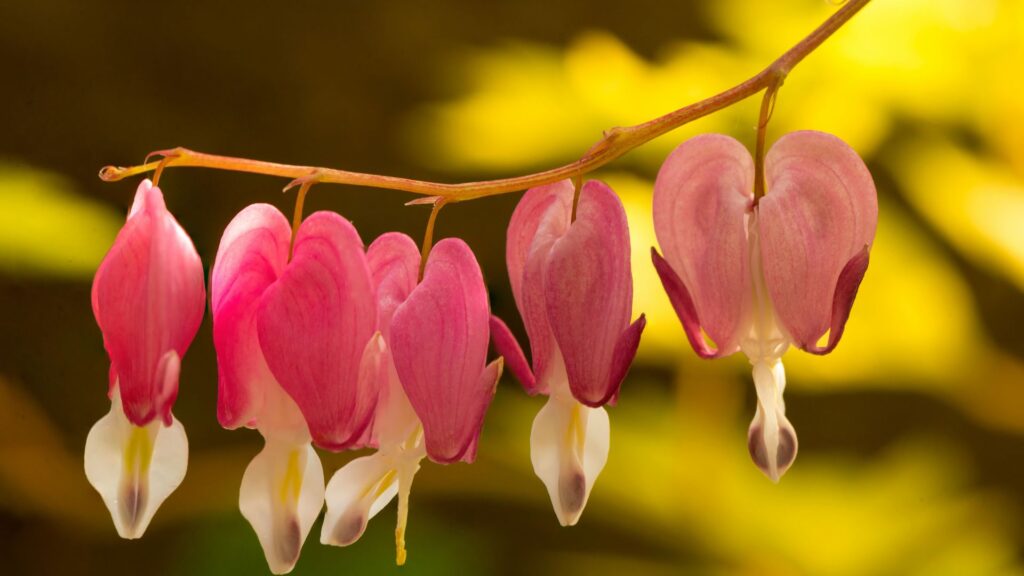
The Bleeding Heart (Lamprocapnos spectabilis) is a beautiful perennial famous for its delicate heart-shaped flowers hanging from graceful arching stems.
It is particularly valuable for shaded gardens and woodland landscapes.
Why It’s a Long-Term Garden Favorite
Bleeding Heart offers:
- Unique heart-shaped flowers
- Reliable spring blooming
- Excellent shade tolerance
- Attractive foliage
- Elegant woodland appearance
Growing Tips
Bleeding Heart prefers:
- Partial shade
- Moist, well-drained soil
- Cool conditions
- Protection from intense afternoon sun
In warmer climates, the foliage may naturally die back after flowering, especially during hot summer weather.
18. Lupine
Lupine (Lupinus species) is a striking perennial known for its tall spikes covered with colorful pea-like flowers. It creates a dramatic vertical display in flower beds, cottage gardens, and naturalized landscapes.
Depending on the species and climate, lupines typically bloom in late spring and early summer. Some varieties may produce a second, lighter flush of flowers when spent blooms are removed.
Why Lupines Return Every Year
Lupines offer:
- Tall, dramatic flower spikes
- A wide range of colors
- Excellent pollinator appeal
- Attractive foliage
- Reliable perennial growth in suitable climates
Growing Tips
For the best results:
- Plant in full sun or light partial shade.
- Use well-drained soil.
- Avoid excessively rich or waterlogged conditions.
- Water young plants regularly.
- Remove faded flower spikes to encourage additional blooming.
Lupines generally perform best in regions with cooler summers.
19. Delphinium
Delphinium (Delphinium species) is one of the most dramatic perennial flowers for adding height to the garden. Its tall spikes are covered with densely packed blooms in shades of blue, purple, pink, white, and other colors.
Why Delphiniums Are Worth Growing
They provide:
- Impressive vertical growth
- Large flower spikes
- Stunning blue and purple shades
- Excellent cut flowers
- Reliable perennial growth in suitable climates
Growing Conditions
Delphiniums grow best with:
- Full sun
- Fertile, well-drained soil
- Regular moisture
- Protection from strong winds
Tall varieties may require staking. Removing the first flush of faded flowers can encourage some varieties to bloom again later in the season.
20. Garden Phlox
Garden Phlox (Phlox paniculata) is a colorful perennial that produces large clusters of fragrant flowers throughout summer.
It is a valuable choice for adding height and long-lasting color to perennial borders.
Why Garden Phlox Returns Every Year
Garden Phlox offers:
- Reliable perennial growth
- Large flower clusters
- Fragrant blooms
- Long summer flowering
- Strong pollinator appeal
Growing Tips
For healthy plants:
- Choose a sunny or lightly shaded location.
- Use fertile, well-drained soil.
- Water during dry periods.
- Provide good air circulation.
- Remove faded flower clusters.
Regular division can help maintain vigorous growth as plants mature.
21. Japanese Anemone
The Japanese Anemone (Anemone hupehensis and hybrids) is especially valuable for extending the flowering season into late summer and fall.
Its graceful stems carry delicate pink or white flowers above attractive foliage, creating an elegant display when many summer flowers begin to fade.
Why It’s a Great Perennial
Japanese Anemones provide:
- Late-season blooms
- Reliable perennial growth
- Elegant flowers
- Good partial shade tolerance
- Attractive upright growth
Growing Conditions
They perform best with:
- Partial shade or gentle morning sun
- Moist but well-drained soil
- Consistent moisture during establishment
- Protection from intense afternoon heat
Once established, some varieties can slowly spread and form larger colonies.
22. Gaura
Gaura (Oenothera lindheimeri) produces delicate white or pink flowers that resemble small butterflies floating above the plant.
Its airy growth habit and long blooming period make it an excellent choice for adding movement to sunny perennial borders.
Why Gaura Is a Reliable Choice
Gaura offers:
- Long flowering periods
- Graceful, airy growth
- Good heat tolerance
- Drought tolerance once established
- Low-maintenance care
Growing Tips
Gaura grows best with:
- Full sun
- Well-drained soil
- Moderate watering
- Good air circulation
Avoid overly wet soil, especially during winter.
23. Blanket Flower
Blanket Flower (Gaillardia species) produces bright flowers in warm shades of red, orange, and yellow.
It is well suited to sunny gardens, dry landscapes, and pollinator-friendly planting schemes.
Why Blanket Flowers Return Every Year
They provide:
- Long-lasting summer blooms
- Excellent heat tolerance
- Good drought resistance
- Pollinator attraction
- Easy-care growth
Growing Conditions
For the best performance:
- Plant in full sun.
- Use sandy or well-drained soil.
- Avoid excessive watering.
- Deadhead regularly to encourage more flowers.
In some climates, individual plants may be relatively short-lived, but suitable varieties can persist and self-seed.

24. Veronica
Veronica (Veronica species), also called Speedwell, produces elegant spikes of blue, purple, pink, or white flowers.
It is a versatile perennial that works well in borders and cottage-style gardens.
Why Veronica Is a Garden Favorite
Veronica offers:
- Colorful flower spikes
- Long-lasting summer blooms
- Reliable perennial growth
- Pollinator appeal
- Compact or upright varieties
Growing Tips
For healthy growth:
- Plant in full sun.
- Use well-drained soil.
- Water during extended dry periods.
- Remove faded flower spikes to encourage additional blooms.
Different varieties vary in height, making Veronica useful for both front and middle sections of flower beds.
25. Aster
Asters (Symphyotrichum species and hybrids) are among the best perennial flowers for late-season color. Their daisy-like flowers appear from late summer into fall, often continuing when many other perennials have finished blooming.
Why Asters Return Every Year
Asters provide:
- Reliable perennial growth
- Late-season flowers
- Excellent pollinator value
- A wide range of colors
- Important fall garden interest
Growing Conditions
Asters perform best with:
- Full sun
- Fertile, well-drained soil
- Moderate watering
- Good air circulation
Dividing crowded clumps every few years can help maintain healthy and vigorous plants.
How to Choose the Best Perennial Flowers
The best perennial flowers that bloom every year depend on your garden conditions and the type of display you want to create.
For Full Sun
Excellent choices include:
- Coneflower
- Daylily
- Coreopsis
- Lavender
- Yarrow
- Black-Eyed Susan
- Russian Sage
- Sedum
- Blanket Flower
- Aster
These plants generally perform best with at least six hours of direct sunlight.
For Partial Shade
Consider:
- Astilbe
- Hellebore
- Columbine
- Bleeding Heart
- Japanese Anemone
- Garden Phlox
These flowers can thrive with gentle morning sun or filtered light, depending on the species and climate.
For Pollinator Gardens
The best options include:
- Coneflower
- Bee Balm
- Salvia
- Yarrow
- Lavender
- Aster
- Black-Eyed Susan
Planting flowers with different bloom times can provide nectar and pollen from spring through fall.
For Low-Maintenance Gardens
Easy-care perennials include:
- Daylily
- Coneflower
- Sedum
- Black-Eyed Susan
- Yarrow
- Russian Sage
Once established, many of these plants tolerate occasional dry periods and require relatively little attention.
Best Recommendations
| Purpose | Recommended Flower | Why It Stands Out |
|---|---|---|
| Best Overall | Coneflower | Reliable, colorful, and pollinator-friendly |
| Best Low-Maintenance | Daylily | Tough, adaptable, and easy to grow |
| Best Long-Lived | Peony | Can thrive for decades once established |
| Best for Pollinators | Bee Balm | Attracts bees, butterflies, and hummingbirds |
| Best for Dry Gardens | Lavender | Fragrant and drought tolerant |
| Best for Shade | Astilbe | Beautiful flowers for lower-light areas |
| Best Long Blooming | Coreopsis | Produces flowers for an extended season |
| Best Fall Bloomer | Aster | Provides late-season color and nectar |
| Best Large Blooms | Peony | Spectacular flowers with strong garden impact |
| Best for Beginners | Black-Eyed Susan | Dependable and easy to maintain |
FAQs
What are the easiest perennial flowers to grow?
Some of the easiest perennial flowers include Daylilies, Coneflowers, Black-Eyed Susans, Coreopsis, Sedum, and Yarrow. These plants are generally adaptable and require relatively little maintenance once established.
Do perennial flowers really bloom every year?
Yes, perennial flowers can return and bloom for multiple years. However, their survival depends on factors such as climate, winter hardiness, soil drainage, sunlight, and proper care.
Some perennials are short-lived and may only persist for a few years, while others, such as peonies, can survive for decades.
What perennial flowers bloom the longest?
Long-blooming perennial flowers include:
- Coreopsis
- Salvia
- Gaura
- Russian Sage
- Garden Phlox
- Japanese Anemone
Deadheading and proper care can sometimes extend their flowering period.
What perennials bloom from spring to fall?
No single perennial reliably blooms continuously from spring to fall in every climate. However, you can create season-long color by combining plants with different bloom times.
For example:
- Spring: Hellebore and Columbine
- Summer: Coneflower, Daylily, Salvia, and Bee Balm
- Fall: Aster and Japanese Anemone
How do I keep perennial flowers coming back every year?
To help perennials survive and bloom repeatedly:
- Choose plants suited to your climate.
- Plant them in the correct light conditions.
- Use well-drained, healthy soil.
- Water regularly while plants establish.
- Divide overcrowded clumps when needed.
- Apply mulch where appropriate for winter protection.
- Avoid excessive fertilizer.
Final Thoughts
Planting perennial flowers that bloom every year is one of the best ways to create a beautiful, long-lasting garden. While annual flowers provide quick seasonal color, perennials establish permanent roots and can become more impressive over time.
A successful perennial garden should include flowers with different bloom periods. Early bloomers such as Hellebores and Columbines can welcome the growing season, while Coneflowers, Daylilies, Coreopsis, and Bee Balm provide summer color. Japanese Anemones and Asters can then extend the display into fall.
By selecting plants that match your sunlight, soil, and climate, you can create a garden that returns with fresh flowers year after year. Combining several of these 25 perennial flowers that bloom every year will help create a colorful, pollinator-friendly landscape with interest throughout the growing season.